
The U.S.-Israeli war with Iran will have considerable economic, security, and diplomatic effects on the African continent. It has already resulted in rising oil prices globally, which in turn has increased transportation and food costs in Africa. Additionally, there is a risk of the conflict extending to the Horn of Africa, where military facilities and shipping routes could be at risk. As African countries clarify their positions on the conflict, they must navigate the challenge of wanting a greater voice in global matters that affect their interests while also avoiding tension with the U.S. under President Donald Trump. A key lesson for African nations from the Iran war is that the autonomy they seek should be accompanied by an understanding that they cannot rely solely on foreign countries and entities for economic growth and security, especially during times of crisis. Chris Olaoluwa Ògúnmodedé reports.
Since it began on Feb. 28, the joint U.S.-Israeli war against Iran has expanded into a broader conflict across the Persian Gulf and the Middle East, with the fallout spreading far beyond the region. For Africa in particular, the conflict has significant economic, security, and diplomatic implications. As African states stake out their positions on the war, they must balance between the desire to have a greater voice in global issues affecting their interests and the need to avoid antagonizing the U.S. under President Donald Trump.
The most immediate impact for African states, as for much of the world, has been felt through global energy markets. The conflict has disrupted oil and gas flows through the Strait of Hormuz, pushing crude oil prices above $100 per barrel. This has led to a spike in fuel, transport, and food costs across Africa.
Some nations – such as Algeria, Angola, Egypt, Libya, and Nigeria, which are among the world’s largest oil and gas producers – may benefit in the short term from the higher crude prices. But challenges such as aging infrastructure, lack of investment, and insecurity mean that the nominal gains they might make from higher prices are likely to be offset by production costs. Moreover, most African countries are net energy importers, including several of the oil-producing nations, which rely on imports for refined fuel due to a lack of domestic refining capacity and supply-chain constraints. Consequently, reduced supplies due to the war, exacerbated by currency pressures and logistics issues, have resulted in long lines of people waiting to buy fuel across the continent.
Fuel prices in Nigeria have increased by as much as 39.5%, leading to a corresponding rise in bus fares in the Lagos region, The Cable newspaper reported.
The war’s impact on energy costs is not the only blow for African economies, at a time when high growth rates, a weaker U.S. dollar, and lower interest rates had otherwise provided some breathing room to many countries burdened with dwindling public coffers and rising debt burdens. The conflict could also affect the more than 1 million Africans who work and reside in the Persian Gulf, who provide sizable remittance flows to their home nations. While the initial reaction to the outbreak of war could trigger a short-term surge in the repatriation of savings, a prolonged conflict risks causing mass unemployment, return migration, and reduced income for these workers, endangering economic stability on the continent.
The conflict is also affecting global maritime trade routes, with cost-of-living implications for African populations. Shipping companies are once again diverting vessels from the Suez Canal and Red Sea to the much longer route around the Cape of Good Hope, due to security risks. This increases freight costs and delivery times for goods heading to African ports, which will be reflected in higher prices for imports and manufactured goods.
Meanwhile, Kenya Airways and Ethiopian Airlines, two prominent African carriers that link major African cities with destinations in Asia and Europe, have canceled hundreds of flights. In addition to lost revenues for the airlines, the disruption to business connectivity is also being felt.
Threats in the Horn
The war’s proximity to the Horn of Africa, which is connected to the Gulf via vital waterways such as the Bab-el-Mandeb Strait, the Gulf of Aden, and the Red Sea, could further destabilize a region whose strategic importance has made it a theater of geopolitical competition among a range of powers. These include Middle Eastern states such as Qatar, Saudi Arabia, Turkey, and the United Arab Emirates.
The Horn is currently experiencing continued instability driven by a web of interconnected crises, including rising tensions involving Eritrea, Ethiopia, and the northern Tigray region, which many fear could trigger another war there. Any potential conflict would unfold at a time when efforts toward humanitarian assistance and foreign mediation would face constraints due to the involvement of the Horn’s external patrons in the Persian Gulf conflict.
The war in Iran could further intensify and militarize the existing tensions around the Horn, by fueling proxy conflicts linked to the Middle Eastern states and their local clients in a region that hosts numerous foreign military installations. Iran has already launched retaliatory attacks at Israel and U.S. military assets in the Gulf states, as well as critical infrastructure in the latter. Many observers in the Horn now worry that military installations, cargo ships passing through the Red Sea, and other strategic assets in the region could be similarly targeted by Iran and its proxies.
Djibouti and Somaliland – a breakaway region of Somalia that declared its independence in 1991 – are thought to be particularly vulnerable to the risk of retaliatory strikes. Djibouti hosts several foreign military bases and installations, including Camp Lemonnier, where a reported 5,000 U.S. troops are stationed in the country’s only official permanent military base in Africa. Meanwhile, Israel formally recognized Somaliland as a sovereign state last year, the first nation to do so. The move was intended to bolster Israel’s presence and counter Tehran’s influence in the Red Sea, where the Iran-backed Houthis had already targeted maritime traffic during the war in Gaza. Amid recent reports that Israel seeks to secure a military base in Somaliland from which to target the Houthis, critics argue that Somaliland’s expanding ties with Israel could further destabilize the region by placing it in the middle of yet another Middle East rivalry.
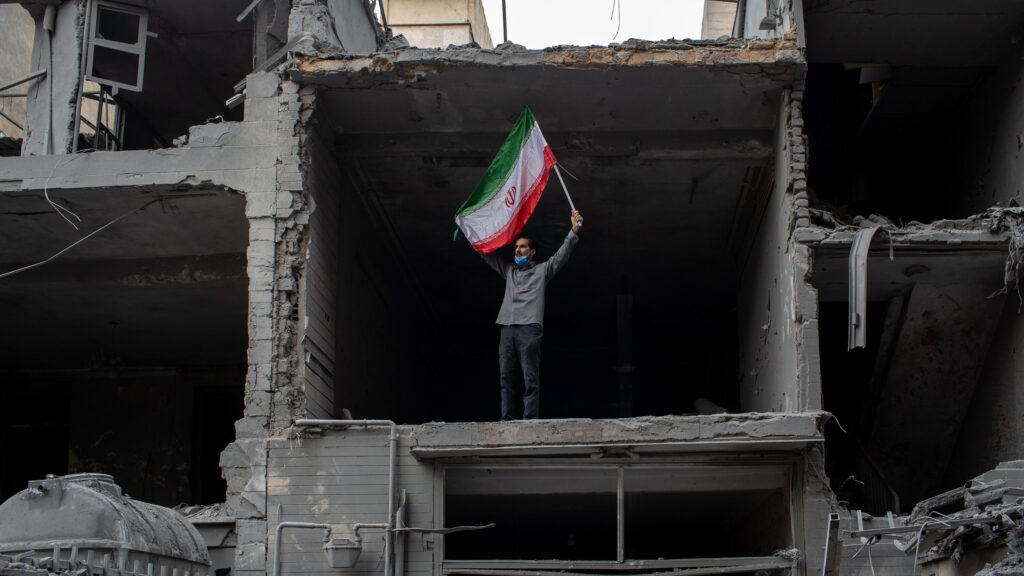
Importantly, the U.S.-Israeli war against Iran has also underscored the complicated geopolitical landscape African governments are navigating as they articulate their diplomatic positions on the conflict. As with most contentious international issues of war and peace, these responses have varied among African governments, shaped by factors including the war’s impact on oil prices and cost of living, individual governments’ ties with the belligerents, and calculations about which side is likely to emerge stronger in the aftermath of the fighting.
Africa’s limited response
Broadly speaking, African governments have fallen into two major groupings in their positions on the war. The first – most evident among states in and near the Horn, such as Djibouti, Egypt, Ethiopia, Kenya, Somalia, and Somaliland – expressed solidarity with the Gulf states, condemning Iran’s retaliatory attacks against them while remaining silent on the initial U.S.-Israeli attack. The other, larger camp – including Algeria, Nigeria, Ghana, Senegal, and South Africa, as well as African multilateral institutions such as the African Union and the Economic Community of West African States – generally avoided taking sides in the conflict, calling simply for a halt in the hostilities and invoking the United Nations Charter, international law, and the rules-based order.
Most notably, there have been virtually no explicit criticisms made of the U.S. and Israel in their conduct of the war against Iran. This can be explained by the fear in African capitals of antagonizing Trump and his administration, which has shown no reservations about imposing its will on foreign states, including by punishing any that run afoul of it.
Many African capitals initially welcomed Trump’s return to the White House, due to his low interest in a values-oriented foreign policy and expectations that his perceived pro-business disposition would lead to more U.S. investment in their economies. But that enthusiasm has since been replaced by apprehension over the aid cuts, tariffs, and travel bans that he has implemented. Most African governments remain strongly pro-American, however, and hold out hope that they can secure favorable arrangements with the Trump administration – provided they don’t attract any unnecessary negative attention in the meantime.
Despite the pragmatic positions taken and carefully worded statements issued by governments across the continent, the impact of the war in the Persian Gulf on African economies, politics, security, and diplomacy is already tangible. It also underscores the urgent need, as unrelentingly expressed by African states, to defend rules-based multilateralism, which gives them a more prominent voice in international politics, as well as for broader reforms of the global order.
At the same time, the destabilizing effects of the Gulf states’ footprints in the Horn should cause governments across the continent to question the widely held belief that multipolarity will by itself lead to better outcomes for African states. If there is one valuable takeaway for African states from the war in the Gulf, it should be that the autonomy they rightly desire must come with the realization that they cannot outsource their economic development and security to foreign patrons whose interests don’t necessarily align with their own, particularly in moments of crisis.