
As Nigeria’s next election approaches in January, a wave of defections by state governors and opposition politicians to the ruling All Progressives Congress (APC) has left the opposition fractured. Holding 31 of 36 state governorships, the APC has handed President Bola Tinubu a major advantage for re-election. Afolabi Adekaiyaoja reports that the race looks far less competitive than in 2023. Combined with widespread disillusionment with the state of democracy and a lack of viable alternatives, the dynamic risks deepening public cynicism and apathy.
Nigerians will vote in general elections in January 2027 with the country’s governing institutions intact and civilian leadership in power. That’s a stark contrast with much of West Africa, where military coups and juntas have become common. But behind this democratic veneer, political tensions are simmering.
Despite rising insecurity and a volatile economy, President Bola Tinubu and his All Progressives Congress (APC) continue to dominate Nigeria’s political landscape, largely due to powerful state governors and erstwhile opposition politicians defecting to the APC. Meanwhile, the leading figures and parties that remain in opposition are fragmented and have been unable to consolidate their forces to present a united front against Tinubu’s re-election bid. The APC’s absorption of every counterweight to its power means that the election is shaping up not as a contest between competing parties but between Nigeria’s political class and its citizens’ hopes of effecting change. And for now, it appears that the political class is winning.
The APC now boasts 31 of the country’s 36 governors, a shocking development given Nigeria’s traditional political fault lines as well as the competitiveness of the 2023 election that brought Tinubu to power. The trend began in 2025 with defections by governors from southern states that previously formed the opposition’s stronghold. By March 2026, only a smattering of non-APC governors remained, but they belonged to different political formations and, despite the power of governorships in Nigeria’s political system, were unable to mount any real opposition to the ruling party. This led to concerns about political elites consolidating around a single platform and even rumors of an agenda to create a one-party state.
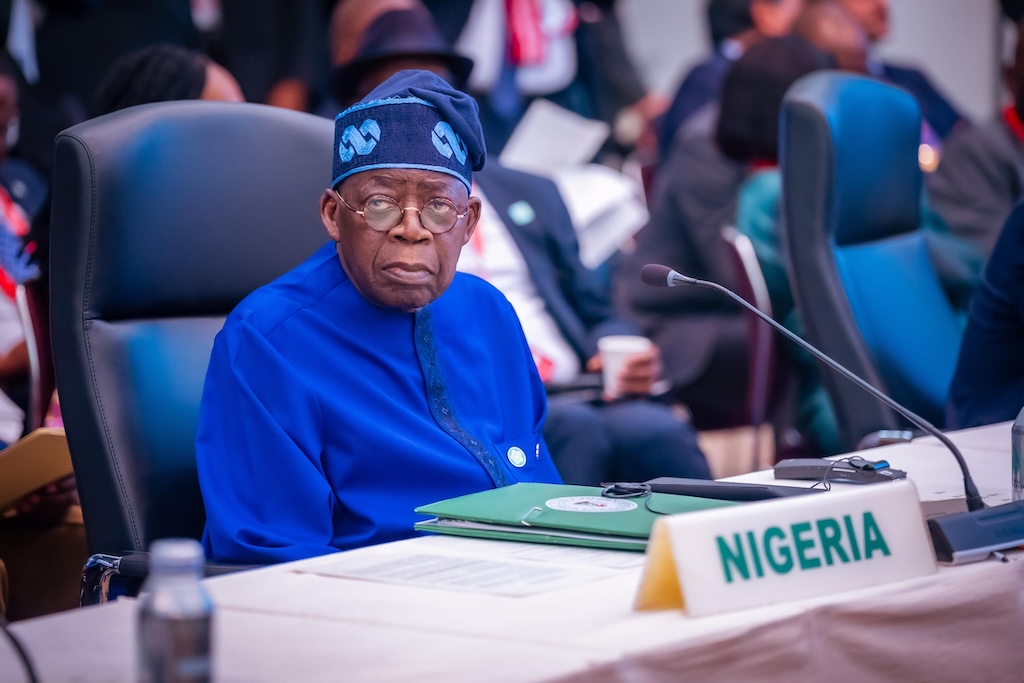
The Tinubu administration claims the defections to the APC are driven by its successes since taking office. Critics argue that politicians are simply seeking to benefit from the patronage network Tinubu has built through his control over federal resources. The two explanations are not mutually exclusive, but the latter is more plausible in a country where party mobilization is poor and most campaigns are run on public funds spent on party efforts by elected officials or well-placed appointees.
Opposition divided
In light of the APC’s growing domination, leading opposition figures could have responded by sacrificing their personal ambitions and consolidating around a single credible standard-bearer to improve their chances of defeating Tinubu. Instead, they have prioritized their own parties, which are little more than personal electoral vehicles.
For now, the three major poles besides the APC are the African Democratic Congress (ADC), which was a second-tier party with no prominent electoral history that was nonetheless chosen as a potential vehicle for an opposition coalition; the Nigeria Democratic Congress (NDC), founded in February by the former governor of Bayelsa state; and the People’s Democratic Party (PDP), a former ruling party that has been embroiled by infighting and is now a shadow of its former self.
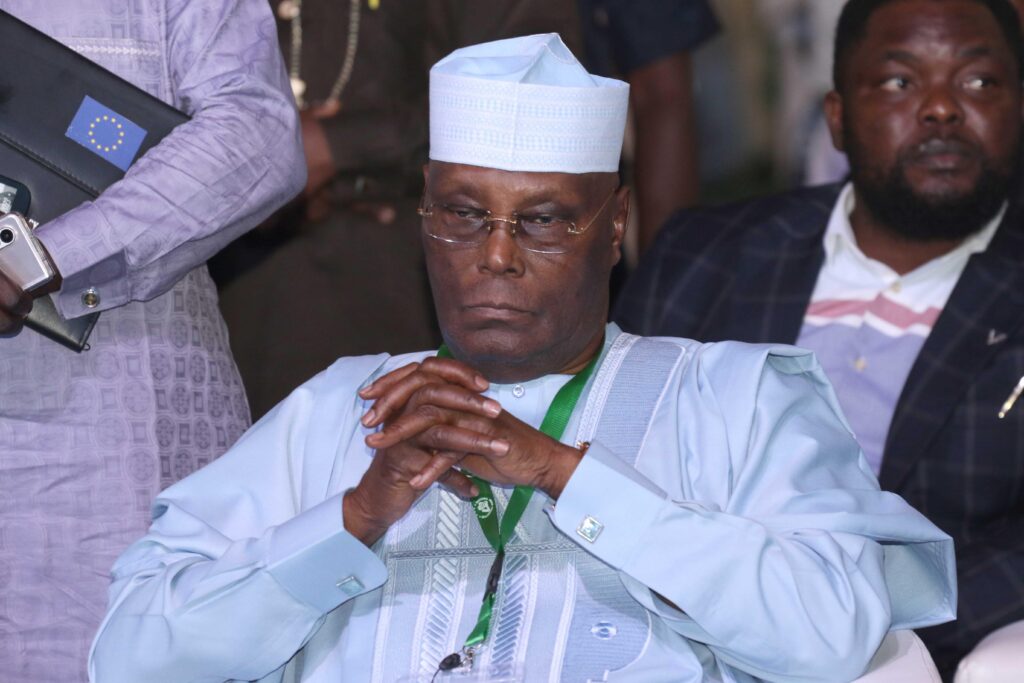
For a brief moment, it appeared that the ADC could become a point of convergence for the opposition, after former Vice- President Atiku Abubakar, a perennial but fading presidential contender, defected from the PDP to join it. He was soon followed by other high-profile opposition members. But Abubakar and Rotimi Amaechi, a former governor of oil-rich Rivers state and Cabinet minister under former President Mohammadu Buhari, both had their eyes on the ADC presidential nomination, causing tensions within the party. They have now resolved to form the ADC ticket, with Abubakar as the presidential nominee and Amaechi as his running mate.
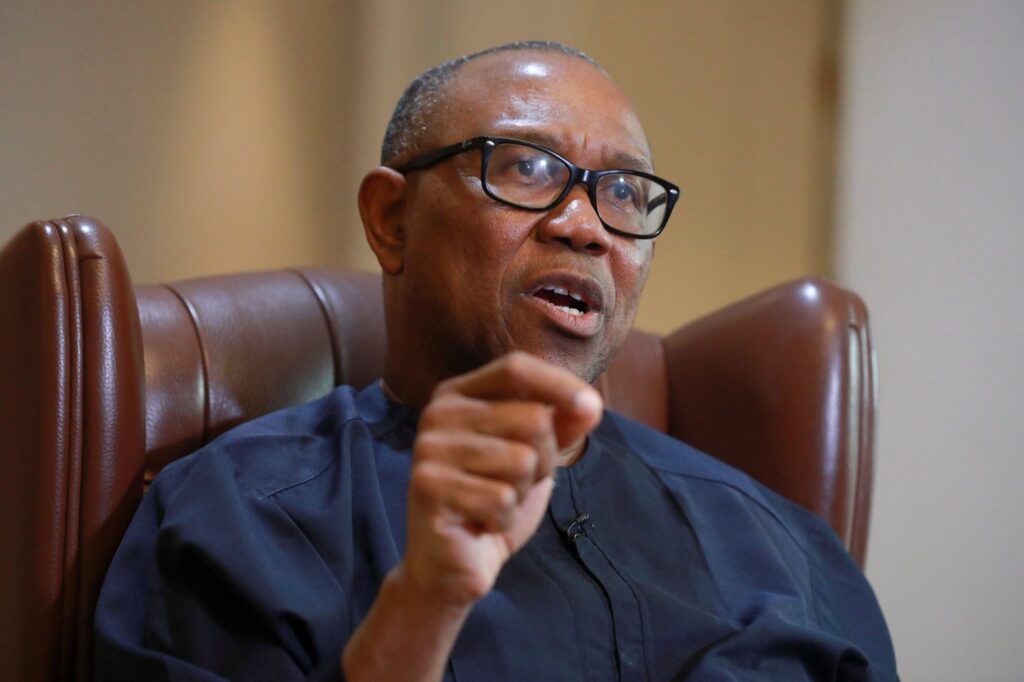
Meanwhile, Peter Obi and Rabiu Kwankwaso – who jointly won over 7 million votes in 2023, finishing third and fourth, respectively – both broke away from the ADC to join forces as the NDC’s presidential ticket, with Obi as the presidential nominee and Kwankwaso as his running mate. The PDP has suffered significant defections to the APC. It has nominated former senator Sandy Ojang Onor for president, but a faction headed by Federal Capital Territory Minister Nyesom Wike has endorsed Tinubu.
As a result of all this maneuvering, Nigeria’s opposition approaches the runup to the 2027 election in a fragmented condition, with none of the major figures besides Amaechi and Kwankwaso willing to play second fiddle as part of a coalition. The likely outcome is a victory for Tinubu, similar to 2023, when he succeeded Buhari – a fellow APC stalwart – as president, despite winning just over 36% of the vote.
With next year’s contest shaping up to be less competitive than the 2023 election, Nigerians experiencing disillusionment with the democratic process will have no viable alternative, adding to already deep wells of cynicism and apathy in society.
Worries about democracy
The dangers of those sentiments became clear in October 2025, when Nigerian authorities quietly arrested 16 military officers on charges of misconduct. It took months before the government acknowledged that the misconduct in question was in fact a failed coup attempt. Though the subsequent investigation and charges pointed to a plot by disgruntled soldiers that predated the Tinubu administration, the unsettling truth was that Nigeria had joined the ranks of the other countries in the region to experience the most overt consequence of growing frustration with democratic leadership.
The irony was that months later, Nigeria would deploy considerable military support to suppress a coup attempt in neighboring Benin. The contrast highlighted the gap between Nigeria’s regional role as a defender of constitutional order and the vulnerabilities of its own democracy. That gap matters, because a country unable to guarantee its own competitive elections can only be a fragile defender of regional democracy.
Nigeria is not unique in this regard, especially in West Africa, which is navigating a period of democratic stress. Military governments in Burkina Faso, Mali, and Niger have formally withdrawn from the regional bloc, the Economic Community of West African States, and formed the Alliance of Sahel States. Afrobarometer’s evaluation of public opinion across the continent continues to show growing disillusionment with democratic processes, especially when citizens conflate difficult socioeconomic conditions with poor democracy. Last year’s coup attempt in Benin was another reminder of the appeal of military rule, particularly in the immediate runup and aftermath of elections.
In Nigeria’s case, concerns about the erosion of democratic legitimacy have become a persistent presence in the years leading up to next year’s polls. And because of the country’s two-term limit, if Tinubu is re-elected next year, considerations over who will succeed him will dominate the following four years, with elite negotiations over the next governing coalition crowding out and subsuming necessary policy discussions affecting Nigerians’ lives. In other words, the 2027 election also represents the opening bell of the competition for 2031.
The 2027 election will therefore decide not just who governs Nigeria for the next four years, but who controls the architecture of succession into 2031. In an environment where a single party dominates, meaningful political competition migrates inward, as the contest that matters shifts from the one between the APC and the opposition to the one among factions within the APC. This will include determining who will be closest to Tinubu so as to inherit his patronage network.
Tinubu’s skill at managing this kind of maneuvering is well-established, as he did it through multiple administrations in Lagos state, where he was governor from 1999 to 2007. That provides him with a template that he will now seek to apply nationally. The risk is that this logic will crowd out the policy debates that Nigerians need most.
Against this backdrop, the civic constituency that delivered millions of votes for Obi in 2023 has not dissipated. To the contrary, it has formed the most determined opposition to Tinubu’s government, and it represents the most organized counter pressure to elite consolidation under the APC’s auspices. Whether that energy will find a meaningful outlet in 2027 or once again be absorbed by friction among a fragmented opposition is one of the election’s genuinely open questions.
The danger is that, if the 2027 election is not competitively contested, it will prompt expectations that the same dynamic will be replicated in 2031. A dominant party, once consolidated, might develop stronger internal mechanisms to reproduce its authority, further entrenching popular frustrations.
The ongoing court-martial of the officers implicated in last year’s coup plot is a reminder that the challenges facing Nigeria’s democracy have not been resolved, but only deferred. A 2027 election that further narrows political competition will do nothing to address those challenges; if anything, it will compound them. The reality is that, for Nigeria and West Africa, the choice between democracy or military rule is a false binary. When it is no longer of the people and by the people, democracy can be defeated without coup plotters.