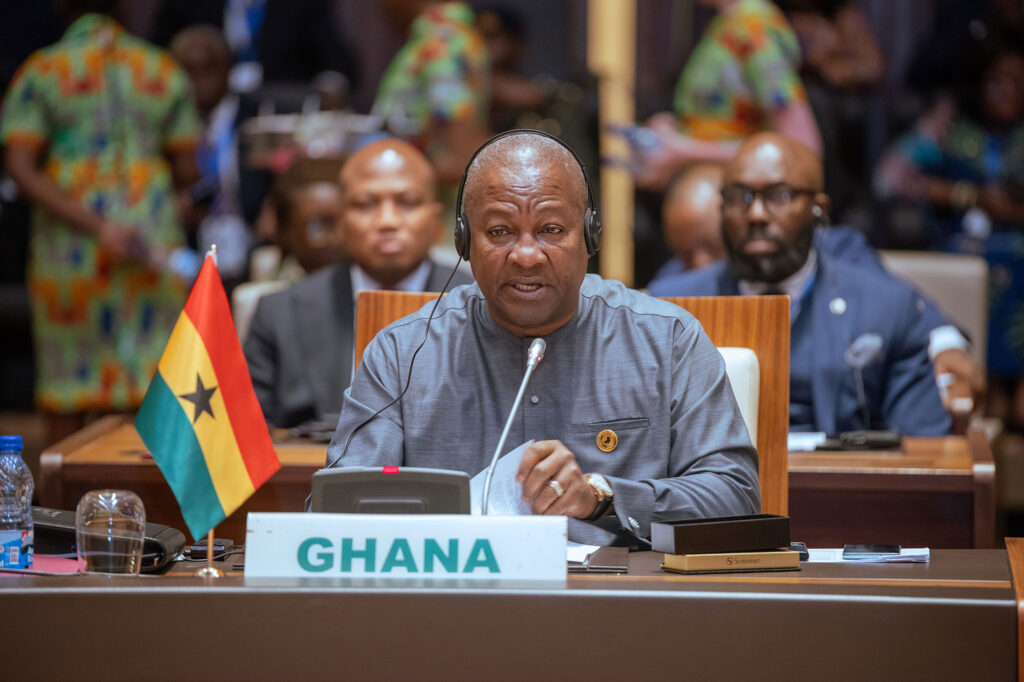
After eight years out of office, President John Mahama, often called by his initials JM, achieved significant success in the first year of his second term. His government decreased the rate of inflation, reversed the nosedive in the cedi’s value, and stabilized the economy. This year, he intends to build on those successes, to make major investments in agriculture and infrastructure, while maintaining strict fiscal discipline. He says he wants his administration to be remembered as “the time when Ghana’s growth trajectory became irreversible.” In this wide-ranging interview, Mahama told Africawatch that he spent much of his time out of office reflecting and learning, and it reinforced his long-held belief that “governance must be anchored in long-term national priorities, not short-term political pressures.” He said the time in opposition also enabled him to examine developing global and geopolitical dynamics more thoroughly, and he is now positioning Ghana to assume a more defined leadership role, especially in West Africa and throughout the continent.
Q: In 2016, you lost re-election by almost one million votes. Last year, however, you made a notable return to office, after winning the 2024 election by more than 1.6 million votes. This has provided you with an opportunity to steer Ghana towards “growth, accountability, and prosperity,” while also reshaping your legacy. What are your thoughts on this opportunity?
A: I have always maintained that the Ghanaian people can never be wrong. Though the 2016 result was personally disappointing, I believe it reflected the perception created of me at the time by the party that eventually formed the government that succeeded mine. Moving from that loss by close to one million votes to a victory margin of over 1.6 million, the largest in absolute terms under the Fourth Republic, is also a reflection of the conclusions the citizens drew after that period. So for me, it was not a personal vindication. It was a clear signal from Ghanaians – a reflection of the hardship they were facing, and their expectation for steady, accountable leadership to reset the economy.
Q: One year has passed since you began your second non-consecutive term as President of Ghana. How has your experience been during this time? And how have you changed the economy?
A: One year into my second term, the experience has been demanding and instructive. Given the outcome of the election, I understand we must act with urgency to meet the expectations of Ghanaians.
The progress recorded so far demonstrates our commitment to meeting those expectations. Inflation declined for 12 consecutive months, from an annual rate of 23.8% in December 2024 to 5.4% by the end of 2025, far exceeding the projected target. The cedi appreciated by 41%, its first annual appreciation in over three decades. Gross international reserves rose from US$8.9 billion to US$13.8 billion, achieving our 2028 target three years early, while the trade surplus expanded from US$5 billion to US$8.5 billion.
These results are outcomes of deliberate choices. They mark a strong foundation for translating stability into jobs, growth, and shared prosperity, which is the next focus of my administration.
Q: “Deliberate choices,” you say. After your first term, you spent eight years at home before returning to office. Tell us some of the things you are now doing differently as a result of your experiences and reflections during that time?
A: The eight years out of office were a period of reflection and learning. They reinforced my long-held belief that governance must be anchored in long-term national priorities, not short-term political pressures. That lesson now guides our approach. Fiscal consolidation, discipline in public spending, and respect for institutional processes are no longer optional. They are central to how we govern.
That period also allowed me to study evolving global and geopolitical dynamics in greater depth. The world has become more fragmented, more competitive, and more transactional. Supply chains are shifting. Geopolitical blocs are hardening. Africa’s relevance is increasing, but only for countries that are prepared. As a result, we are positioning Ghana to play a clearer leadership role, particularly in West Africa and across the continent.
We are strengthening economic and security diplomacy, deepening engagement within ECOWAS and the African Union, and leveraging platforms such as the African Continental Free Trade Area to make Ghana a hub for trade, logistics, and value addition. At the same time, we are protecting our strategic assets, reinforcing democratic institutions, and pursuing partnerships that respect our sovereignty and advance our national interest. These reflections now inform both our domestic choices and our foreign-policy posture.
Q: Still on the first year, what challenges did you encounter during the year just gone by?
A: The first year brought serious and immediate challenges. We inherited an energy sector burdened by unsustainable debt and on the brink of another power crisis. This situation demanded swift and decisive intervention to keep the lights on and restore stability to the sector.
At the same time, we had to manage intense pressure for increased public spending while pursuing the fiscal discipline needed to stabilize the economy. Balancing social needs with macroeconomic responsibility was not easy, but it was unavoidable. We chose discipline, tough prioritization, and reform because lasting recovery depends on getting the fundamentals right.
Q: When you returned to office last January, you characterized the situation you inherited as a “crime scene.” Was that not an exaggeration?
A: Well, I used strong language because the situation required honesty. Acknowledging the problem was the first step to fixing it. Upon assumption, we found abuse of procurement processes – awards of contracts to unlicensed companies, payment to contractors for literally no work done, key economic buffers dissipated, state institutions saddled with debt that could not be justified, and unstable currency driven by illegal central-bank financing, among others.
Q: Was it that bad?
A: You better believe me. It was that bad!
Q: Yet within a year, your government has received recognition for enhancing economic stability. S&P Global, Moody’s, and Fitch have upgraded their sovereign credit ratings for Ghana due to improved liquidity and decreased fiscal risks. The economic growth was very strong in 2025, and by September, real GDP had increased by about 6%. The value of the national currency, the cedi, has appreciated significantly, rising from 17 cedis to the U.S. dollar in January 2025 to about 11 cedis in December. As you indicated earlier, inflation has fallen dramatically. The country’s gross international reserves have increased considerably, providing almost five months of import cover. What factors do you attribute this to? Is it simply good fortune, or a result of effective macroeconomic performance?
A: It is not a matter of good fortune. It reflects a sharp departure from reckless borrowing and spending towards deliberate, fiscally disciplined macro- economic management. We restored fiscal control, strengthened revenue collection, and closed leakages in public spending, particularly in procurement. Appointees no longer receive free fuel, and first-class travel has been eliminated. By establishing the Ghana GoldBod, which makes the state the sole buyer and seller of gold, we have strengthened our reserves and can now better meet demand in the foreign exchange market.
Essentially, we are living within our means – spending on the right sectors at the right time, guided by the true strength of our economy.
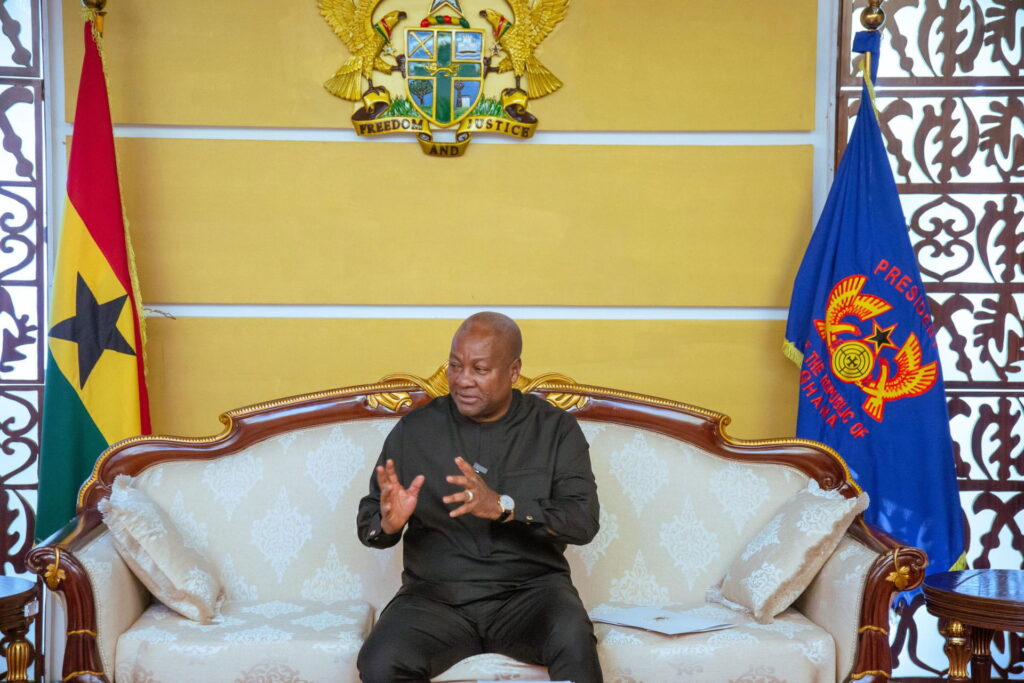
Q: Is the economy’s positive outlook bringing back the foreign investors who left the country during the very challenging times?
A: Before the 2024 elections, many foreign investors I encountered on my travels indicated they would view a change in government as a signal of the people of Ghana’s intent to change course. Some of them had been through a rough patch with the former government and had either left or held off on further investment.
Since our return to power, we have engaged with a number of investors, particularly in the oil and gas sector, and these engagements are yielding fruitful out-comes, with renewed commitments to new investment.
Q: Talking about improved stability brings into focus Finance Minister Cassiel Ato Forson and the Bank of Ghana Governor Dr. Johnson Pandit Asiama. They have garnered significant recognition both domestically and internationally for their roles in helping you to stabilize the economy. Notably, for the first time in several years, the cedi did not depreciate during the Christmas season. What has your experience been like working with them?
A: Working with them has been steady and constructive. They understand their roles and respect the limits of their mandates.
The Finance Minister focuses on fiscal discipline. He has taken tough decisions, especially the strict enforcement of commitment authorization before any procurement is approved. That single step has helped rein in waste, prevent arrears, and restore order to public spending.
The Governor’s responsibility is monetary stability. Dr. Asiama has acted with independence, brought inflation under control, and helped stabilize the currency. Ending central-bank financing of government was a turning point.
What has worked is coordination without interference. Fiscal and monetary policy are now aligned, and that discipline is why the cedi held firm, even over the Christmas period.
Q: In your inauguration speech on January 7, 2025, you promised to prioritize agriculture and agribusiness, with the intention of stimulating local industry, attracting foreign investment, and creating more job opportunities for the many young people who are currently unemployed. How is this initiative progressing?
A: We are currently rolling out the “Nkoko Nketenkete” program to boost domestic poultry production, reduce imports, and create about 300,000 jobs. Through the Farmer Service Centers initiative, the government is supplying farmers with 4,400 agricultural machines, including tractors, disc plows, and combine harvesters, across 50 agricultural districts. The National Employment and Internship Program is currently implementing our “Adwumawura” program, which supports 10,000 young entrepreneurs to scale up each year. There are many such initiatives across various sectors that should come together to create opportunities for our teeming youth.
Q: Last year, the agriculture sector, supported by key crops such as cocoa, cassava, maize, and yams, as well as livestock and fisheries, showed significant growth, contributing about one-fourth of the increase in GDP. How is your government working to improve value addition and diversify exports?
A: We are moving agriculture decisively from primary production to value addition and export growth. We are supporting agro-processing by improving infrastructure, expanding farmer training, facilitating access to finance, and strengthening market linkages across crops and livestock.
We have begun establishing farmers service centers, creating farm banks, promoting urban farming, and revitalizing the poultry industry to reduce imports and stabilize supply. Under the Feed Ghana Program, I recently cut the sod for a US$400 million multipurpose poultry and feed-processing facility in Bechem. Alongside this, we are increasing local raw material production to supply agro-processing factories nationwide, ensuring agriculture drives jobs, industry, and export diversification.
Q: In July last year, your government initiated the 24-Hour Economy and Accelerated Export Development Program, emphasizing that it “is not just about working longer hours,” but “about creating an enabling framework for productivity – supported by infrastructure, financing, and strong institutional collaboration,” in which the government would work with the private sector. What progress has been made with this program?
A: The 24-hour economy program was envisioned to create an economic system that operates around the clock so that we can have expansion to create as many jobs as possible for our youth. It is intended also to achieve self-sufficiency in many sectors and has an accelerated export-development component, which I directly supervise.
This is designed to build an export- oriented economy in the medium to long term. Much work has gone into implementing the 24-hour economy program, and we should see a full rollout this year with the setting up of the 24-Hour Economy Authority.
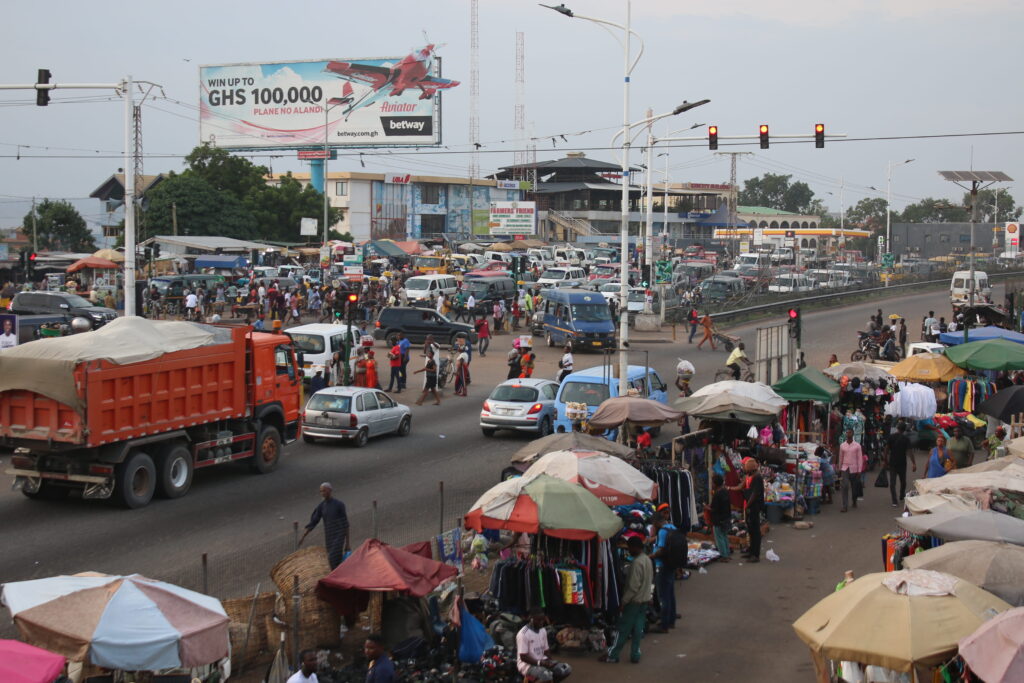
Q: Now let’s move to the energy sector, one of the hardest nuts to crack in the country. What is happening in the sector, particularly with its huge debt? What is the current status of your plans to rejuvenate the Electricity Company of Ghana (ECG) and minimize its losses through the introduction of private-sector participation?
A: You say it right – one of the hardest nuts to crack. I can tell you, without mincing my words, that the energy sector crisis is largely driven by operational inefficiencies and escalating debts. My government has paid US$1.47 billion to clear legacy sector debts and is now current with independent power producers, enabling us to restore the World Bank Partial Risk Guarantee of US$500 million.
ECG’s monthly revenue has also increased by 90%, from GH¢900 million to GH¢1.7 billion, due to strict adherence to the Cash Waterfall Mechanism.
Additionally we are engaging key stakeholders to allow private participation in electricity distribution, to enhance operational efficiency. We are implementing an array of reforms, which are aimed at injecting efficiency and stability into the sector. We have made significant gains by keeping the lights on, despite inheriting a very dire situation.
Q: Keeping the lights on must remind you of the “dumsor” days of your first term in government. To avoid going back to those bad days, you have said you want at least 30% of Ghana’s energy to come from renewable sources. What measures are underway to achieve that transformation?
A: Yes, “dumsor,” who can forget those days. But now we are committed to ensuring that at least 30% of Ghana’s energy comes from renewable sources, and we are taking concrete steps to achieve this transformation.
Under the new initiative, we are deploying 12,000 net-meter solar photovoltaic systems across homes, constructing 35 mini-grids to electrify 47 island communities, and providing 1,450 solar home systems to off-grid households and public institutions. A 200-megawatt solar project is also underway across multiple locations nationwide.
In addition, we are advancing innovative floating solar projects. A 25-megawatt plant is being built at the Bui Power Station, with floaters manufactured locally to boost local content, while the Volta River Authority is developing a 30-megawatt floating solar facility at the Pong Hydro Reservoir, funded by KfW. These measures collectively aim to diversify our energy mix, increase sustainability, and bring reliable power to more Ghanaians.
Q: Let’s move to the oil sector. The country experienced nearly five years of decreasing oil production, primarily due to legal issues. What measures are being implemented to increase oil production, and how are investors reacting?
A: The first order of business is to restore our reputation as a safe and stable investment destination for oil and gas companies. The previous government got into all manner of squabbles and heated disputes with some of the biggest investors in the sector and created a hostile atmosphere for them.
The situation has changed significantly since we came into government. We have had a series of engagements with investors in the sector and assured them of cordial relations and prudent policies. They have responded positively to this, by committing to scale up investments to ramp up oil and gas production.
Q: You have also launched the “Big Push” initiative, with a plan to invest US$10 billion of petroleum revenue and minerals royalties over five years to expand infrastructure across the country, including roads, bridges, health and education facilities, and agriculture projects. How has the program performed this year?
A: A total allocation of GH¢43.9 billion has been dedicated to priority road projects under the Big Push Program. We’ve cut the sod for key projects including the Dodowa-Afienya-Dawhenya road, the dualization of the Takoradi-Cape Coast highway, and the Wenchi-Sawla-Wa road, covering over 300 km. Additionally, 166 constituencies are set to receive 40 km of roads each over the next four years, improving both local and inter-regional connectivity across the country. Nothing opens up a country quicker and more sustainably than good roads and modern infrastructure. We are committed to ensuring the modernization of our infrastructure to serve as the backbone to a rapidly expanding economy.
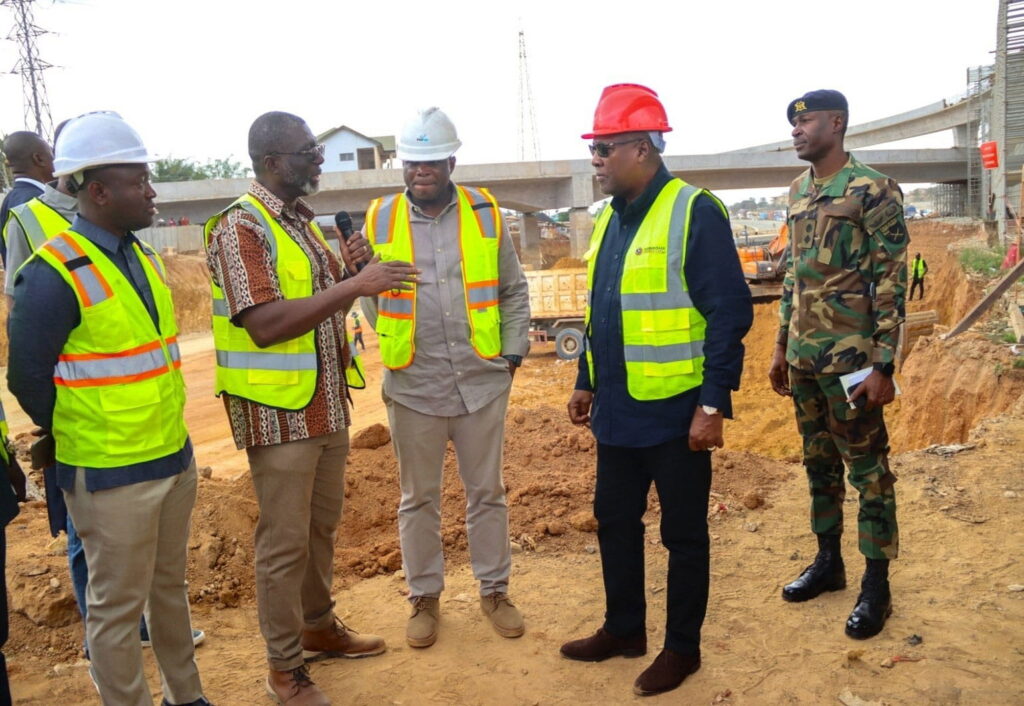
Q: Talking about roads, Parliament approved the construction of a six-lane Accra-Kumasi Expressway in December 2025, which is part of your “Big Push” initiative. This new expressway will run alongside the current Accra-Kumasi Highway. What is really the reasoning behind this huge project?
A: The six-lane Accra-Kumasi Expressway is a key part of the Big Push because the current highway is heavily congested, slowing down travel and the movement of goods between two of our largest economic centers. Building a parallel expressway will cut travel time, improve safety, and make it easier for businesses and farmers to move their products. It will also open up new areas for investment and development, supporting growth across the regions.
Q: Your first term as president, from January 2013 to January 2017, featured a widespread infrastructural program. However, some of these projects were not finished before Nana Akufo-Addo’s government took office and abandoned some of them. What actions is your government taking regarding these unfinished projects?
A: We are committed to securing the necessary funding to complete all such pro-jects. We have also drawn useful lessons, which we will apply to how such projects are conceived and implemented.
Q: Is there any update on the projects initiated by Akufo-Addo’s government that are still incomplete, especially the National Cathedral, which has so far incurred a cost of US$58 million? Have you made any decisions regarding the future of this project?
A: On the National Cathedral, it is my view, and I believe that of many Ghanaians, that its construction is not in principle problematic. However, the use of state resources at a time where the country is faced with numerous economic and developmental priorities is where the challenge lies. A forensic audit is currently underway to ascertain the full facts of what happened to the public resources put into the project. Once that is completed, we will determine the way forward.
Q: What about Akufo-Addo’s Agenda 111 program to build 111 hospitals?
A: None of those hospitals are fully operational, despite substantial spending under the previous government.
Completing the projects will require about US$1.7 billion in additional funding. My government has placed the projects under the Ministry of Health for closer oversight and auditing. New financing approaches, including public-private partnerships, and budget allocations for 2026 aim to complete existing hospitals and expand access to health care.
Q: So what would you say has been satisfactorily achieved in the health sector so far?
A: So far, we have made important progress in stabilizing the health sector. We cleared the GH¢603 million in National Health Insurance Scheme (NHIS) arrears, restoring confidence in the system. The uncapping of the National Health Insurance Levy has increased revenue from GH¢6.52 billion in 2024 to GH¢9.76 billion in 2025. As a result, the NHIS is now much more prompt in releasing funds, having disbursed over GH¢1.38 billion in just the first half of 2025 alone. These steps have strengthened financial stability and improved service delivery across the sector.
Q: UNICEF reports that 57% of Ghana’s population currently does not have access to safely managed drinking water. You have committed to ensuring that all Ghanaians have access to potable water. What actions are being taken to reach this goal?
A: Good question. In my previous term, we had already laid a strong foundation, increasing water coverage by 110 million gallons per day. Building on that, my government is investing heavily to expand access further, aiming for universal potable water by 2028. We are starting in the Oti Region, where a GH¢37 million water-supply project will provide clean water to over 65,000 people. This is part of a broader effort to ensure that all Ghanaians can access safe and reliable drinking water.
Q: Now let’s go to education. In February 2025, a National Consultative Forum on Education was conducted, bringing together important stakeholders to address challenges in the education sector. What has become of their recommendations? Are you satisfied with the progress so far made, particularly regarding the Free Senior High School (SHS) program?
A: The National Consultative Forum on Education provided clear recommendations on improving quality, teacher training, and infrastructure. Progress has been steady: The Free SHS program continues to benefit over 1.2 million students, and for the past year, we have not recorded a single instance of food shortages – a major challenge previously.
We are now delegating procurement of major food items to head teachers, to support local economies. Teacher recruitment and school infrastructure upgrades continue, and while challenges remain, these steps show our commitment to meaningful reform and improving the learning environment.
Q: Last October, Education Minister Haruna Iddrisu announced that classes in all basic schools must be taught in the “dominant local language,” instead of in English. The idea is that children learn better when taught in their mother tongue. But how do you choose which of the country’s major recognized languages is the main one in an area? And how can you provide mother-tongue education when most textbooks available are in English?
A: The “dominant local language” policy selects the main language of instruction based on the language most spoken in a district or municipality, informed by census and local surveys.
To support this, we are producing textbooks, teacher guides, and audiovisual materials in major local languages, while also gradually training teachers to deliver content effectively.
Q: So textbooks are already being produced in local languages?
A: Yes, they are.
Q: Well, that is good to hear. But let me cite you this example: Last November, Nigeria discontinued its “mother-tongue education” policy, which had been in effect for nearly three years, citing its failure to meet expectations. That policy, introduced in 2022, was also based on the belief that children learn more effectively in their native language during early education, which had been supported by various United Nations studies. But Nigeria reverted to using English as the sole language of instruction from primary school through university, citing issues with implementation and poor exam results under the mother-tongue policy. Isn’t Ghana’s “dominant local language” education policy too risky?
A: We are aware of Nigeria’s reversal of its mother-tongue policy. Ghana’s approach differs: It is phased, localized, and accompanied by teacher training and textbook development. Lessons from Nigeria highlight the need for strong implementation and monitoring, which we have built into our rollout plan to minimize risks.
Q: Still on education, the West African Senior School Certificate Examination (WASSCE) 2025 results indicated a significant number of failures in four subjects, including core mathematics and social studies. What were the contributing factors?
A: The 2025 WASSCE results reflect longstanding challenges within the education system rather than any single failure or policy decision. Learning outcomes are shaped by a combination of factors, including teaching and learning conditions, curriculum transitions, classroom contact time, and student preparedness over several years. Changes within the system have also placed pressure on schools and teachers, while broader social and parental factors continue to influence student performance. What is clear is that no single cause can be isolated. Our response is focused on solutions. We are expanding infrastructure to improve learning time, strengthening teacher support and supervision, and working more closely with parents and stakeholders to reinforce discipline and academic focus. The priority is to steadily improve outcomes and ensure that students are better prepared going forward.
Q: Switching subjects to youth welfare, are you happy with the progress of your programs designed to enhance economic opportunities for the youth, including the Adwumawura program launched in April 2025 and the National Apprenticeship program that began in July?
A: The Adwumawura Program is already empowering thousands of young Ghanaians aged 18 to 35. It provides training, mentorship, and access to funding, rather than cash handouts, and is designed to help participants launch and grow sustainable businesses. For the first cohort, over 120,000 applied, and 10,000 young entrepreneurs were selected to participate nationwide, with many already engaged in intensive business-skills development. Partnerships with other agencies, including support for agribusiness, are strengthening the program’s impact.
Similarly, the National Apprenticeship Program is connecting the youth to small and medium-sized enterprises and artisans across the country, giving them practical skills and direct pathways to employment. Both programs are delivering on their mandate to build capacity, create jobs, and generate long-term economic opportunities for our young people.
Q: You have also expanded the Livelihood Empowerment Against Poverty (LEAP) program, and improved the Ghana School Feeding Program. What other social protection plans do you have in place to ensure that vulnerable individuals are fully supported?
A: Beyond LEAP and the School Feeding program, we are strengthening NHIS coverage for the poor, expanding Free SHS with targeted support, implementing free tertiary education for persons with disabilities, and scaling up youth employment and women-focused livelihood programs. We are also building shock- responsive social protection for vulnerable households, ensuring no Ghanaian is left behind.
Chronic diseases are also a silent pandemic in Ghana and the entire world. To guard against the vulnerability it exposes most people to, we have set up the Ghana Medical Trust Fund (Mahama Cares) to support individuals with chronic conditions.
We have implemented the “No Fees Stress” policy, under which we pay fees for all first-year tertiary students.
We also have the free sanitary-pad initiative, to distribute about l2 different sanitary products to girls in school. Period poverty is a major problem, especially in rural communities, and this program is designed to address it.
Q: Another major challenge is housing poverty, isn’t it? Over the last 25 years, despite significant construction efforts, many Ghanaians continue to face challenges in finding affordable and decent housing. The National Development Planning Commission has indicated that the country requires an additional 1.8 million housing units, as a substantial portion of the urban population lives in informal settlements. What measures is your government implementing to increase the availability of housing?
A: We have a social program, which we intend to execute through public-private partnerships. We will deliver more affordable housing. One such initiative is the Oxygen City Project in Ho under TDC Ghana Limited, which I cut the sod for a couple of weeks ago. We will complete all ongoing housing projects and ensure the use of low-cost building methods.
Q: Let me switch the subject again. You are working to establish a new national airline for the country. If successful, it would be the third national airline, following the closures of Ghana Airways and Ghana Inter- national Airline, which you have described as grave mistakes. What actions is your government taking this time to prevent another similar mistake?
A: I can tell you that we have learned hard lessons from the failures of Ghana Airways and Ghana International Airline, and this time we are doing things differently. The new national airline will be run on strict commercial principles, with minimal political interference and a professional, independent management structure.
Our partnership model will be very clear, transparent, and publicly disclosed, with credible private-sector and international partners sharing risk, capital, and expertise. The government will act as a strategic shareholder, not an operator. Strong governance, accountability, and financial discipline will be in place to ensure sustainability and prevent the mistakes of the past.
Q: And here comes a major, major headache for the country. Illegal gold mining, commonly referred to as “galamsey,” is significantly harming the environment and water bodies in the country. How is your government enhancing efforts to combat galamsey?
A: Yes, I agree. Galamsey is a major headache for the country. The fight against it is imperative for the survival of every Ghanaian. Through the targeted and robust efforts of the National Anti-Illegal Mining Operations Secretariat, we have repossessed nine reserves that were originally declared red zones. We are mapping the coordinates of mining-site plans to track the movement of equipment. All excavators must be imported with prior authorization and a justified purpose. All excavators imported into the country are now fitted with tracking devices to enable us to track their activities.
Q: Like galamsey, corruption is another major headache for the country. Therefore, public expectations were elevated when you launched the anti-corruption initiative, Operation Recover All Loot (ORAL), but the slow pace of prosecuting corruption-related cases has led some to suggest that it has stalled. What is the current status of the initiative, and what progress is being made in your broader fight against corruption?
A: I can tell every Ghanaian here and now that ORAL is in full swing. Prosecutions are ongoing, notably involving the National Service, National Signals Bureau, Sky Train, and Buffer Stock, among others. Over 100 people have either been questioned, granted bail, or put on trial. There are about 20 dockets on different cases that are being prepared and which will go to court very soon.
While we are committed to holding public office holders to account, and I appreciate the public expectation of swiftness, we must understand that we are a democracy that guarantees the liberties of the individual. And a criminal procedure that will curtail liberty where individuals are found guilty must be grounded in due process, which allows the individuals to defend themselves. That should not be mistaken for a slow pace or a lack of commitment.
Q: Last December, the government requested that the United States extradite former Finance Minister Ken Ofori-Atta, who was declared a fugitive in June 2025 and formally charged with corruption in November. What is your perspective on the controversy related to his case?
A: The Attorney General is working closely with the U.S. government to secure an extradition. Some of the processes are already playing out in U.S. courts. Ultimately, our objective is to ensure transparency, uphold the rule of law, and hold individuals fully accountable for their stewardship and actions.
Q: The Constitution Review Committee, established by you in January 2025 to make recommendations for addressing democratic deficits in Ghana’s Constitution, submitted its report in December. What are the next steps?
A: The committee did quite a thorough job and has offered recommendations that appear far-reaching and responsive to some of the nagging concerns with the current Constitution. Because it is not the report of a commission, we cannot issue a “White Paper.”
We will, however, make our position as government known through a public statement, once the Attorney General and my legal counsel finalize their study of the report. After this, a committee will be established to see to the implementation of the recommendations.
Q: Now, let’s turn to the Ghanaian diaspora. What strategies are being employed to encourage Ghanaian professionals living abroad to return and support the country’s development?
A: We are implementing targeted strategies to attract Ghanaian professionals back home, including offering incentives such as tax breaks, career advancement opportunities, and research grants. Additionally, we are creating platforms for diaspora engagement, fostering partnerships with local industries, and supporting entrepreneurial initiatives, all designed to ensure that their skills and expertise can directly contribute to Ghana’s development.
And most important is general economic stability. Individuals and corporations want certainty and predictability when investing their resources in a country. The rule is the same for our own compatriots. We are delivering that stability to engender their trust in our system.
Q: The African Union has appointed you as its Champion for Slavery Reparations, and in December, a global delegation comprising historians, legal scholars, economists, and civil society activists from Africa, Europe, the Caribbean, Latin America, and the United States met with you in Accra. They encouraged you to motivate African leaders to prioritize the reparations agenda and choose “courage over comfort.” While there has been increasing international support for reparations, opposition from former European slaving nations continues to be strong. What have you achieved in this role so far?
A: As AU Champion for Reparations, the immediate priority has been to move the issue beyond symbolism and into serious policy and diplomatic engagement. Over the past year, we have helped reposition reparations as a question of justice, development, and global responsibility, grounded in evidence and international law rather than emotion. The engagement with a broad global delegation in Accra was an important step in aligning historical research, legal thinking, economic analysis, and civil society advocacy around a common, coordinated agenda.
At the continental level, work has begun to build coherence among African states so that the issue is approached with unity and strategic clarity. This includes strengthening research on the long-term economic and institutional damage caused by slavery and colonial exploitation, as well as integrating the issue into Africa’s broader development and diplomatic conversations.
Q: What are your plans for advancing the reparations agenda in 2026?
A: Looking ahead, the focus is on consolidation and escalation. The goal is to secure a very clear, unified African position and advance it consistently in international forums, including the United Nations and other multilateral platforms.
Engagement with the Caribbean and the wider African diaspora will be deepened, and greater emphasis will be placed on translating historical and moral arguments into practical frameworks for redress and partnership.
Progress will not be easy, and resistance remains real. But sustained advocacy, coalition building, and strategic persistence are essential. This is about advancing justice in a way that strengthens Africa’s future and affirms its place in the global order.
Q: When you assumed office in January 2025, you expressed a desire to bring the Alliance of Sahel States nations – Mali, Niger, and Burkina Faso – back into the ECOWAS framework and to enhance trust among West African countries. What progress has been made in this regard?
A: These countries are important players within our subregion. I believe that an approach that keeps channels of communication open, with the ultimate aim of reintegration, is the best. It is with this objective that as one of the most important steps since my investiture, I nominated an envoy to the Sahel. We cannot shut the door to open dialogue and collaboration to our neighbors. I believe it is in all our national security interest to keep channels for dialogue open. We have succeeded in doing that. We share historic economic and social ties. Also, in view of the threat of terrorism, it was necessary to collaborate with them to keep our citizens safe. It was important to learn about their concerns and see how best we can work out sustainable relations. That is why I visited all three Sahel countries, and those visits have helped improve relations with them, while opening a channel of engagement between them and ECOWAS.
Q: In the next 25 years, Africans are expected to make up 25% of the global population, and the continent’s total GDP is projected to reach $29 trillion. However, Africa often plays a marginalized role in international affairs. As you prepare to assume the presidency of the African Union in 2027, what can we anticipate?
A: Africa’s scale is no longer a future story. It is a present reality. A continent that will account for a quarter of the world’s population and a multitrillion-dollar economy cannot continue to operate at the margins of global decision-making. As we prepare for the AU presidency, the approach will be pragmatic and strategic. In a changing global order marked by fragmentation and rivalry, influence will belong to those who can build coalitions, act with coherence, and offer stability. Africa must behave as a confident power at scale. Not by choosing sides, but by advancing its interests with clarity and consistency.