
About 45% of deaths in Ghana are attributed to chronic, non-communicable diseases, such as cancer, diabetes, and cardiovascular ailments. However, the national health system is largely focused on acute care. To close that gap, President John Mahama initiated the Ghana Medical Trust Fund last year, and full operations are set to commence this April. Africawatch interviewed Adjoa Obuobia Darko Opoku, the fund’s administrator, in Accra. She expressed optimism about the program’s future while recognizing the significant challenges that remain, particularly in public hospitals that lack essential equipment such as cardiac catheterization laboratories.
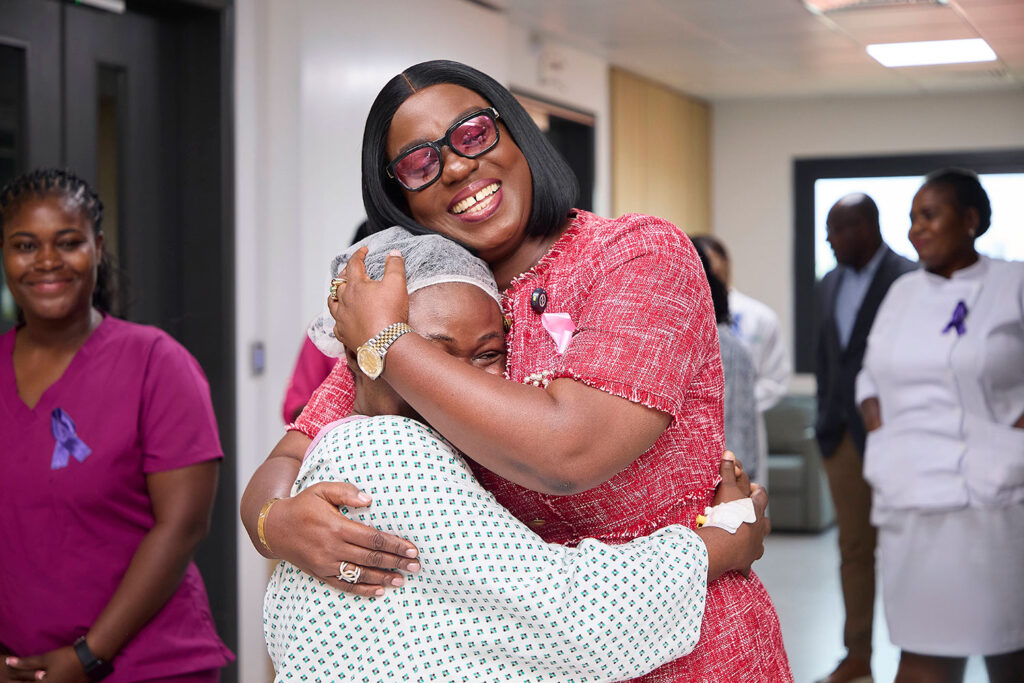
Adjoa Obuobia Darko-Opoku, Administrator of the Ghana Medical Trust Fund (GMTF) established to support patients with non-communicable diseases (NCDs), describes their high incidence as concerning. Approximately 45% of the country’s deaths are attributed to conditions such as cancer, cardiovascular diseases, kidney failure, diabetes, and stroke.
A significant issue is that government hospitals lack the medical equipment and laboratories necessary to treat certain illnesses. For instance, as of the end of February, none had an operational cardiac catheterization laboratory. Consequently, any Ghanaian requiring these services must rely on facilities in private hospitals and medical centers, where treatment is expensive. As many people cannot afford this, their only option is to forgo treatment.
This is why the GMTF, also known as Mahama Cares, is important. The Fund, which is expected to begin its services on April 1, is in the process of establishing three cardiology centers in Accra, Kumasi, and Tamale.
It may be surprising that Ridge Hospital in Accra, originally an exclusive medical facility for Europeans during the colonial period and now the regional hospital for the Greater Accra Region, does not have the diagnostic equipment required to perform CT scans, magnetic resonance imaging, mammograms, or fluoroscopy.
“This hospital treats over a thousand patients daily, many of whom are admitted,” Darko-Opoku laments. “Patients consult a medical doctor and if they require an MRI or CT scan, the doctor will submit a diagnostic request for private facilities outside the hospital. These reports are then returned to the doctors at Ridge for further treatment.” She hopes that the GMTF will be able to fully equip Ridge Hospital by the end of March through private donations. “We have called on corporate Ghana to assist with the hospital’s equipment,” she tells Africawatch. “The response has been very positive. One corporation has committed to purchasing an MRI machine while another has agreed to provide a mammogram machine.”
Same everywhere

The equipment deficit is not unique to Ridge. Ghana’s leading referral hospital, the Korle Bu Teaching Hospital in Accra, also lacks a cath lab, as its previous one was damaged in a fire and subsequently rendered out of service. The Komfo Anokye Teaching Hospital in Kumasi and the Tamale Teaching Hospital in the north also do not have cath labs.
The law that established the Ghana Medical Trust Fund passed by Parliament last July requires it to create the infrastructure space and purchase equipment to treat chronic conditions. It is constructing three cardiology centers at Korle Bu, Komfo Anokye, and Tamale hospitals. These will be fully equipped with modern cath labs, operating theaters, intensive-care units, consulting rooms, pharmacies, and dedicated oxygen plants.
“We have already commenced work,” says Darko-Opoku. At Korle Bu, “because we are simply replacing the equipment,” she hopes that it will be open by the end of March. She expects that the cardiology centers that GMTF is building at Komfo Anokye and Tamale will be open “by the end of August.”
“Can you imagine how many lives will be saved by these cardiology centers?” Darko-Opoku told Africawatch.
Saving lives
During his second term in office, President Mahama has prioritized saving lives. Darko-Opoku recounts the harrowing story of a midwife who suddenly fell ill during childbirth.
“She suddenly became unwell and was admitted to hospital,” Darko-Opoku says. “She was transferred to Korle Bu Hospital where a brain aneurysm was diagnosed. The facility could not treat it without a catheterization laboratory, so she was referred to a private hospital.”
She continues, “Korle Bu Hospital transferred the lady to Euracare Spring Hospital in Accra. Euracare provided her care and informed us that the procedure would cost GH¢210,000 (approximately US$19,700). Clearly, she did not have the funds and neither did her family. Therefore, the Fund took the initiative and paid Euracare. Within three days the procedure was completed, and the clot was removed from her brain. She was ready to return home.”
If the patient had remained at Korle Bu Hospital, Darko-Opoku explains, she would have required “open-head surgery” as the facility lacked a catheterization laboratory, precluding less invasive methods of clot removal.
Two weeks later, the midwife was “well and preparing to resume work,” Darko-Opoku states.
“Without the Ghana Medical Trust Fund, such a patient would have faced significant financial hardship,” she concludes.
At Korle Bu’s cardiology department, Darko-Opoku says, “We have funded surgery for ten children with congenital heart defects. These children would otherwise be in a terminal state. However, thanks to the Ghana Medical Trust Fund they now have hope and will receive treatment. I am hopeful that all will undergo the surgery and recover.”
She clarifies that “those who assume the Ghana Medical Trust Fund will end when John Mahama’s presidency concludes are mistaken. The GMTF was established by an Act of Parliament. If you do not personally benefit from it or have someone close to you who does, you may not realize its significance until you need it.”
How the GMTF works

The GMTF represents President John Mahama’s commitment to creating a more inclusive healthcare system, ensuring that no Ghanaian is excluded from treatment for non-communicable diseases. The World Health Organization predicts that those conditions will become the leading cause of death in Africa within 15 years.
Perhaps this prediction informed President Mahama’s determination to give every Ghanaian a chance to receive treatment for chronic diseases when needed, regardless of their financial situation. He launched the GMTF in April 2025. Parliament passed the Ghana Medical Trust Fund Act (Act 1144) last July.
“The Act is our Bible,” says Darko-Opoku. “Everything we do here is what is in the Act.”
Basically, the GMTF carries over from where the National Health Insurance Scheme (NHIS) ends. The NHIS treats patients to a certain level, beyond which they have to obtain further care themselves.
“Even for those on dialysis,” Darko-Opoku explains, “they can have twice-a-week treatments under the NHIS. But at a certain point, the NHIS simply ends. So where the NHIS ends, the Ghana Medical Trust Fund takes over. Clearly, it’s an initiative that has brought relief to persons living with NCDs, because it takes care of the chronic situations when patients get off the NHIS.”
Patients are selected for GMTF care based on both their financial situation and the severity of their illness. Their doctor makes the approach to the GMTF on their behalf.
“You cannot directly enroll yourself on the Ghana Medical Trust Fund,” says Darko-Opoku. “Your doctor is responsible for this process. They upload your medical records to the GMTF computer system. Within 14 days, we assess your eligibility and approve your enrollment.”
The GMTF does not make direct payments to patients. Payments are made directly to the hospitals and medical centers treating them.
Patient navigators employed by the Fund will be stationed at various hospitals and medical centers that will be part of the system. The GMTF will initially work with 21 government medical institutions: ten regional hospitals, five teaching hospitals, and six district hospitals in areas where regional and teaching hospitals are not available. In Greater Accra, the Fund will also work with some private hospitals and medical centers that have sophisticated equipment not found in government hospitals. Occasionally even Korle Bu Hospital refers cases to these private facilities. The fund aims to onboard all of these private facilities.
For the April rollout, the fund will work with 30 facilities. These will be connected to the GMTF software so that medical doctors can make interventions for their patients.
Pilot project
In its first year of operation, the Ghana Medical Trust Fund conducted a pilot pro-ject of 50 cases to assess the functionality of its system. It funded the pilot through a portion of the GH¢6.6 million it received in corporate and private contributions last autumn.
“Our objective was to evaluate the treatment of patients across various medical facilities and gain a comprehensive understanding of the process,” Darko-Opoku explained to Africawatch. “We commenced the 50 pilot cases with donations from corporate institutions and individuals. To date, we have treated 37 patients aged between five months and 70 years, including those with severe conditions.”
The beneficiaries of the pilot project so far have come from 11 of Ghana’s 16 regions, with the remaining 13 patients from the other regions.
The cases have involved brain surgeries, open-heart surgeries, chemotherapy, radio-therapy, deep-seated tumors, prostate cancer surgeries and minimally invasive vascular procedures. So far, the costs have amounted to GH¢3.2 million and the GMTF expects to spend an additional GH¢1 million on the remaining 13 cases.
According to Darko-Opoku, the pilot project validated the GMTF’s operational model and strengthened internal controls in preparation for a national scale-up.
“The pilot cases have provided valuable insights into various areas,” she stated. “I am pleased that the cases have proceeded smoothly.”
The infrastructure gap
Darko-Opoku emphasized the importance of closing the infrastructure gap in public hospitals.
“Our Act mandates that we purchase the necessary equipment and create the infrastructure space to treat NCD patients. Without these, it is impossible to provide the required care,” she told Africawatch. “It is well-known that before treating cancers, CT scans, MRIs, and radiology equipment are very essential. During our nationwide assessment, we identified a significant equipment deficit.”
For instance, the sole public radio- therapy treatment center in Ghana is located at Korle Bu Hospital. Consequently, if patients in Tamale require radiotherapy, the Ghana Medical Trust Fund would need to transport them to Accra. This would necessitate accompanying the patients and providing accommodation and support during their stay, which would incur substantial costs for the GMTF.
The Fund is considering establishing five medical zones across the country, Darko-Opoku explained. “By placing one radiology machine in Tamale, the Volta Region, the Western Region, the Ashanti Region and Greater Accra, we can address the needs of these regions and gradually expand coverage across the country.”
The Fund is also pursuing public-private partnership (PPP) arrangements for medical equipment and infrastructure.
“Private entities and companies can establish diagnostic centers within various public hospitals and medical centers,” she explained. “The GMTF will lead the process and engage public hospitals to allocate land or space within their facilities for PPP holders to set up and collaborate with the government.
“We anticipate that within a year, all public hospitals will have the basic equipment required for the treatment of NCDs.”
These investments, Darko-Opoku hopes, will significantly expand Ghana’s capacity for interventional cardiology and vascular procedures.
Full rollout
The Ghana Medical Trust Fund plans to commence the full rollout of its services on April 1. It has utilized the past seven months to establish its secretariat and conduct a comprehensive needs assessment.
“We have visited every medical facility onboarded to collect data on equipment shortages and patient data from individuals with cancers, kidney failure, diabetes, cardiovascular diseases, and other chronic conditions,” says Darko-Opoku.
The result was a document referred to as “Our Needs Assessment” which, Darko-Opoku states, informs GMTF on the equipment needs each hospital requires to function, before its rollout. This is because the GMTF will engage these facilities to treat its patients.
The GMTF’s founding Act gave it four core mandates: (a) paying the medical bills of NCD patients; (b) filling the equipment and infrastructure gap; (c) investing in specialist training for doctors, nurses, and health workers who treat NCD patients; and (d) investing in research.
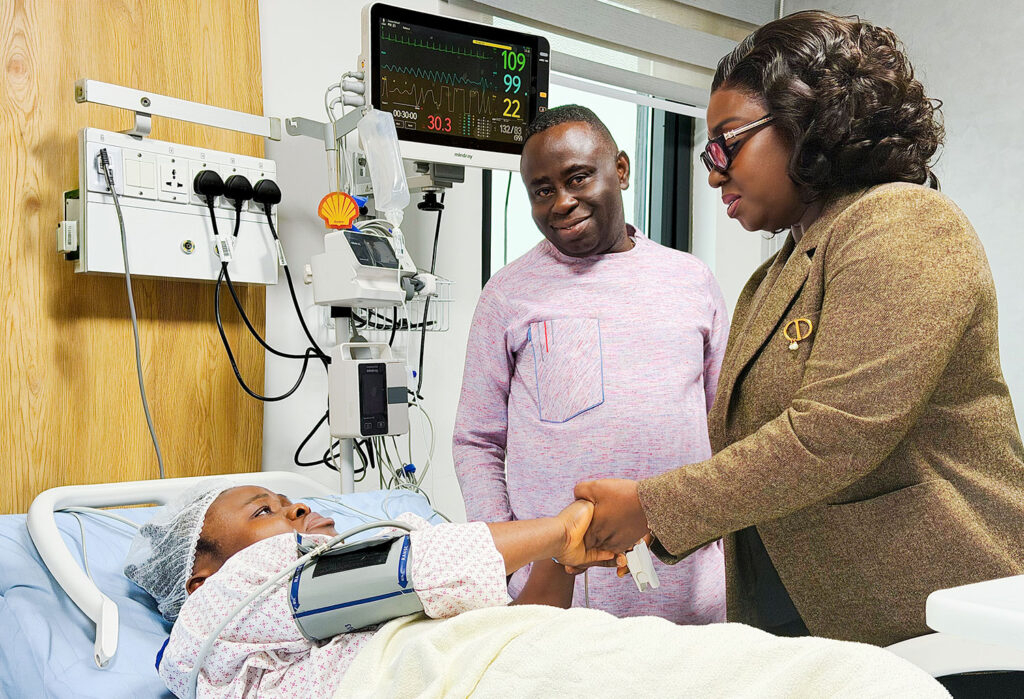
Darko-Opoku says research will be conducted in all 16 of Ghana’s regions to ascertain why particular NCDs occur more frequently in certain areas.
“We need to send people to the regions to conduct research to determine whether it is the water they are drinking that is causing a particular cancer or something in their diet. This will help us understand what conditions are emerging from which areas.”
To train specialist doctors, the GMTF is collaborating with the College of Physicians and Surgeons, she told Africawatch. “To avoid disrupting operations at hospitals and medical centers, the College will organize training teams to conduct sessions on-site, and in three years each region is expected to have specialist doctors.”
“In addition, we are providing funding for the training of 100 pharmacists and 100 nurses,” Darko-Opoku said.
Funding
By law, GMTF will receive 20% of the funds allocated to the National Health Insurance Scheme. It will supplement this with donations from corporations, private entities and individuals.
In February Parliament approved an appropriation of GH¢2.9 billion for the GMTF for this year. GH¢2.3 billion will primarily come from its 20% share of NHIS funds while the remainder consists of last year’s budget balance carried over. However, additional funding will be required if the Fund is to support more individuals with chronic diseases, given Ghana’s population of 35 million.
“We aim to increase contributions from corporate Ghana, other institutions, and individuals,” says Darko-Opoku. “We are undertaking extensive public education to inform people that the 20% contribution from the NHIS is not sufficient on its own. Corporates, institutions and individuals are encouraged to support us in this effort.”
“I am confident that the President and the Finance Minister will recognize our progress, and during the mid-year budget review we may have the opportunity to secure additional funding,” she adds.
Darko-Opoku believes that securing a direct and sustainable funding stream for the GMTF would significantly benefit both the organization and its patients. The best hope, she says, is that after evaluating the Fund’s performance after one year the government may consider establishing a dedicated funding mechanism.
The GMTF is not yet receiving international grants, but it has sought assistance from Project C.U.R.E. based in Denver, Colorado. Project C.U.R.E. is part of the Benevolent Healthcare Foundation, one of the largest non-profit organizations providing medical supplies and equipment to developing countries.
Project C.U.R.E. staff have been in Ghana evaluating the nation’s medical needs.
“I am optimistic that they will approve some equipment for us,” Darko-Opoku told Africawatch. “We are also in discussions with the Alliance for Health Financing in Africa who are funded by Bill & Melinda Gates Foundation, and collaborating with Mercy Ships. A Mercy Ship will arrive in the country in July and will remain for 11 months to perform 10,000 surgeries.”
“I believe the Ghana Medical Trust Fund is a significant game-changer,” Darko-Opoku stated.