
Rwanda has become the prominent military force in the Great Lakes region of East Africa, providing support to the M23 rebels in the Democratic Republic of Congo and assisting the Central African Republic in fighting insurgents. However, despite its well-structured military and reputation as a stable nation, this has not resulted in an effective peace plan for the war-torn area and could potentially destabilize the region in the future. Paul-Simon Handy reports.
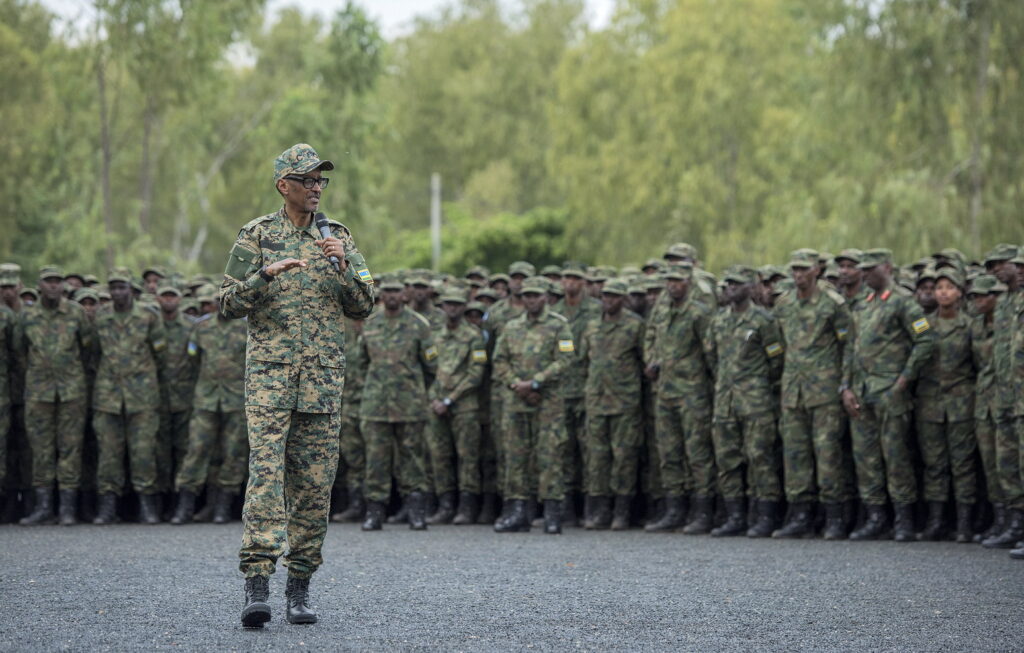
In early December 2025, the M23- Alliance Fleuve Congo (AFC) coalition, supported by the Rwanda Defense Force, took control of Kamanyola, a strategic town on the border of the Democratic Republic of the Congo (DRC), Rwanda, and Burundi. The coalition then captured Uvira, a key city on the Burundi-DRC border – protected by Burundian forces, and less than 40 km (25 miles) from Bujumbura, the capital.
These swift battlefield advances happened during and after the signing of the Washington Accords, which led the United States to publicly criticize Rwanda for its role in Uvira’s capture. The Burundian forces’ defeat consolidated Rwanda’s power in the Great Lakes region, further demonstrating its military supremacy.
In recent years, Rwanda has effectively prevailed against or neutralized various forces and coalitions, including contingents from South Africa, Tanzania, Malawi, DRC, Burundi, and the United Nations peacekeeping mission in the DRC. Rwanda’s military dominance is such that few states appear willing to intervene militarily to support stabilization efforts or peace agreements in eastern DRC.
For the first time in modern African history, a country’s military supremacy is being built on battlefield effectiveness, organizational discipline, and diplomatic agility – not primarily on economic size, gross domestic product, or technological advancements. Rwanda has shown its capacity to translate tactical victories into political leverage, while managing international criticism through sophisticated diplomacy.
This “smart power” approach uses hard and soft power with targeted diplomatic and economic projection beyond the country’s immediate neighborhood. Support is provided by Rwanda’s national brand as a peaceful and efficiently run country.
However, President Paul Kagame has failed to translate Rwanda’s military supremacy into a regional peace plan. The Great Lakes region is characterized by an asymmetric, Rwanda-dominated, military order rather than a shared, comprehensive peace plan.
The DRC is weakened, internally fragmented, and resentful of Rwanda’s hostile presence. Burundi is militarily bruised and economically strained. Uganda seems more concerned about preventing Kigali from further extending its influence into Congolese territory and upsetting Kampala’s regional ambitions.
In its immediate neighborhood, Rwanda appears to seek deterrence and respect – if not outright fear – while aspiring to cultivate a more positive, cooperative, and responsible image beyond the region.
Kigali’s uncompromising stance in the Great Lakes relies primarily on military force and strategic ambiguity. It also invests heavily in public diplomacy, UN peacekeeping operations, and branding itself as a reliable international partner. This leads to conflicting official narratives surrounding its presence in eastern DRC, which is frequently framed as a humanitarian imperative to protect allegedly endangered Tutsi communities.
Kigali’s goals unclear
While widely shared among Rwandan officials, the country’s strategic intent remains unclear. Will the country risk pursuing military power for its own sake, like Israel and Russia, which have elevated military deterrence to a national strategic objective? In such models, security becomes both the means and the end, often at the expense of political reconciliation and long-term legitimacy.
Domestically, Rwanda’s current trajectory could be serving two purposes. On the one hand, the dividends of the DRC war may help finance the security and defense apparatus – long presented as the bedrock of national stability and social control. Increased access to strategic resources could give the regime fiscal space to manage social pressures, including the expectations of a rapidly growing and youthful population.
On the other hand, as the generation that fought the liberation war gradually retires, maintaining a state of confrontation with the DRC may serve a deeper political purpose. It helps sustain a war ethos among younger generations, reinforcing discipline and loyalty. Rwanda may be seeking to preserve the moral and social foundations of state power through collective solidarity amid hardship and struggle.
Rwanda’s territorial gains earned through proxies also undermine regional stability. The volatility in areas administered by the AFC-M23 demonstrates this strategic dilemma. Would a buffer zone, or a Donbas-like territorial arrangement, foster stability by freezing the conflict? Or would it instead institutionalize a long-term fault line between Rwanda and the DRC, embedding resentment and setting the stage for future confrontation?
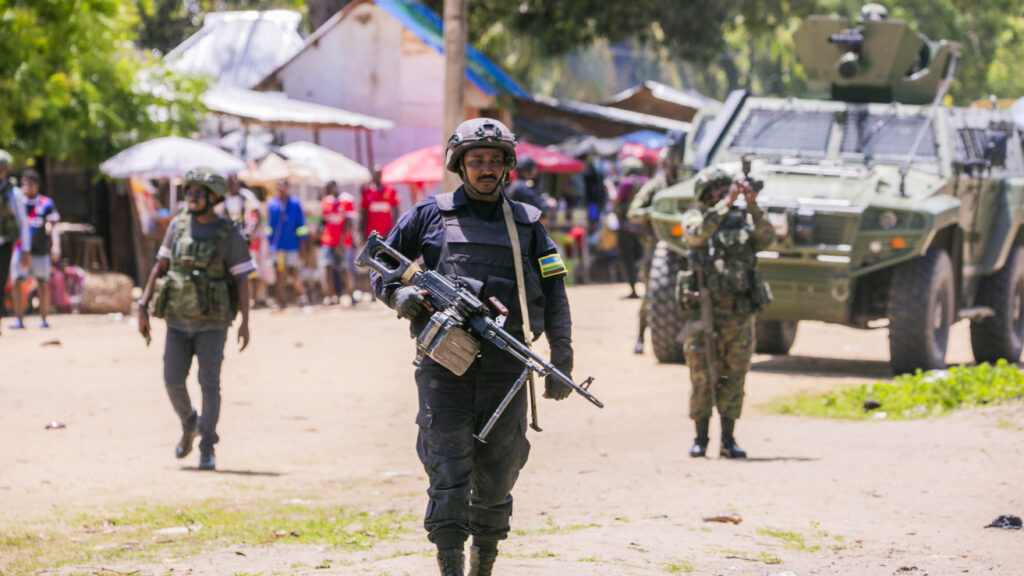
Even if such arrangements generated short-term economic gains through access to resources or trade routes, could this compensate for the human, financial, and reputational costs of prolonged territorial control and international scrutiny?
Over the past decade, Rwanda has diversified its international partnerships and consolidated its image as a credible and effective security actor. This image is reinforced by Rwanda’s growing role as a security provider beyond the Great Lakes. In Mozambique and the Central African Republic, its forces have been deployed to support counter-insurgency operations, reinforce state authority, and stabilize regions affected by armed conflict.
These interventions have enhanced Rwanda’s reputation as a reliable partner for governments facing internal security crises, while strengthening its diplomatic leverage in Africa and beyond.
However, its military dominance in what could be termed the “Third Congo War” does not mean a Rwandan hegemony in the Great Lakes. The country lacks the economic, political, and cultural power to assert leadership in the region.
Kigali’s strategic ambiguity and increasing willingness to challenge post-colonial borders raise questions. Is it anticipating a shift towards a post-Ukraine international order, in which states no longer hesitate to contest inherited borders and longstanding territorial norms? If so, Rwanda may not merely be an outlier, but a precursor.
But how sustainable would continental stability be if other states emulated Kigali’s model? What would Africa look like if military power, rather than collective security negotiated between states, became the primary currency of regional order?
Without the full capacity to impose hegemonic leadership, Rwanda’s military dominance in the Great Lakes region will, in the short term, remain a source of tension. In the medium to long term, Rwanda’s stability depends on a stable region where deep-seated mistrust between political elites slowly evolves into cooperative security, a system in which states’ respective comparative advantages benefit the collective.