
Tensions are rising between Senegalese President Bassirou Diomaye Faye and Prime Minister Ousmane Sonko. Sonko, who was much more prominent, selected the relatively unknown Faye as their Patriots of Senegal (PASTEF) party’s candidate in the 2024 presidential election because he himself was barred from running. Faye subsequently appointed Sonko as prime minister. Since November, indications of discord have emerged between the two, hindering their ability to address the nation’s various issues, particularly its worsening debt situation. Jessica Moody reports.
Senegalese Prime Minister Ousmane Sonko made a dramatic declaration last fall that underscored a deepening rift between him and the country’s president. “I don’t work for Bassirou Diomaye Faye, I work for Senegal,” he told lawmakers on Nov. 28. It was only the latest in a series of public statements indicating a falling-out between Senegal’s two most powerful figures.
During the 2024 presidential election campaign, for which Sonko was disqualified due to a previous conviction on defamation charges, Faye stood in his place. Their Patriots of Senegal (PASTEF) party adopted a slogan in Wolof, “Diomaye mooy Sonko,” meaning the two leaders were the same. Sonko founded PASTEF. Following Faye’s victory in the election, which was followed by PASTEF winning an overwhelming majority in legislative elections, the two men pledged to share power and govern in concert.
Today, however, their alliance has given way to rivalry and frustration. In early November, Faye removed Aissatou Mbodj, a close Sonko ally, as head of the Diomaye President coalition, the political alliance that brought Faye to power last year. He replaced Mbodj with former Prime Minister Aminata Toure, his own campaign coordinator.
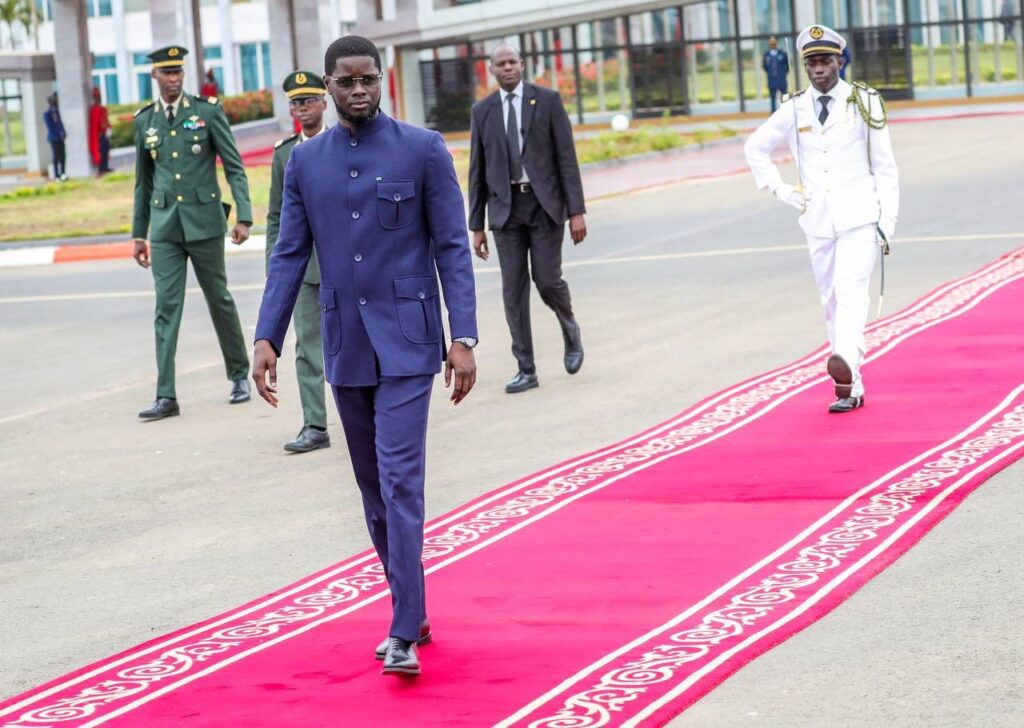
Sparks flew as Sonko accused Faye of disrespecting him and directly challenging his influence. He then convened PASTEF’s leadership and claimed that Faye did not have the authority to make such a decision and that Toure does not share the party’s values or principles.
Amid these divisions, PASTEF organized a major demonstration in the capital, Dakar, ostensibly to consolidate support for the party. It attracted more than 100,000 people, but appeared more like a campaign rally for Sonko than an effort to mend fences with Faye.
And recently Sonko said he was willing to take his party out of the government and return to opposition if Faye breaks from its vision amid a power struggle between the two party colleagues.
Tensions have increased in the West African country following violence at universities and long drawn-out talks with the International Monetary Fund as Senegal battles to raise cash and negotiate a new lending program with the IMF.
Asked by a supporter about the relationship between the two men, Sonko said in a live broadcast that the “debate” would be moot “if the president is aligned with his party.”
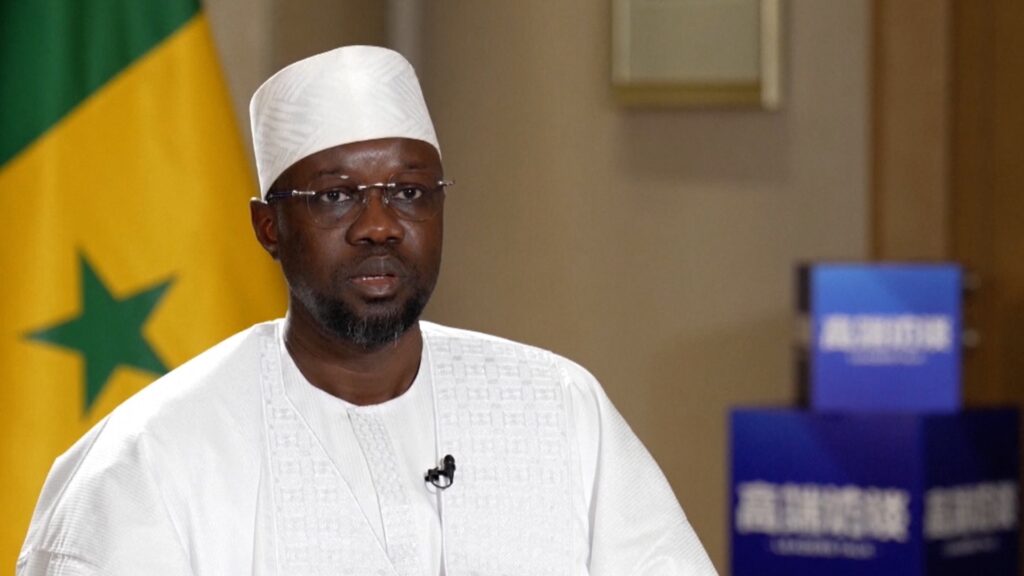
“If the president is not aligned with his party, even though we all govern together, we’re in what I call a ‘soft power-sharing’ situation,” he said. “We would manage our differences accordingly, and we would also seek common ground to move forward together.”
But if there is a clearer break, he said, they would either have a “more difficult cohabitation” or the PASTEF party, which Sonko leads and which holds a majority in parliament, would revert to being an opposition party.
“PASTEF has no problem with either of these options,” he said.
“The battle for the 2029 presidential election has begun,” one member of the president’s inner circle told Le Monde. This sentiment seemed to be confirmed on Dec. 7, when Sonko declared that “nobody can prevent me being a candidate” in the next election.
The schism between the two erstwhile allies threatens to metastasize into a broader governance crisis. Senegal has historically functioned as a hyper-presidential system, but this spat seems to show the prime minister with far more support and a stronger popular mandate than the president. Very few public figures have come out in favor of Faye since the dispute spilled over into view, with many instead suggesting that he betrayed Sonko.
Given Sonko’s high level of popular support, one way to resolve the crisis would be for Faye to step back from governing. He has recently indicated he might be at least somewhat willing to do this. In early December, the president announced several major reforms to the prime minister’s office, allegedly to improve “performance,” but also likely to placate Sonko by giving him more power.
Such changes are unprecedented in the nation’s history, though it is not clear that they fundamentally alter the power balance between the offices of the president and the prime minister. There has been no change to the constitution, meaning these new measures are largely administrative in nature. Faye is unlikely to go any further, given his apparent desire for greater control.
Consequently, PASTEF is likely to be increasingly fractured. Faye has already expressed concerns over “persistent divisions,” and political instability will likely pose challenges for the policymaking process.
Student protests
This could not have come at a worse time. A student’s death during protests in February at Cheikh Anta Diop University in Dakar, the capital, reflects growing frustration among the country’s youth, who accuse the government that they helped to put in office of leaving sweeping promises unfulfilled.
The dramatic violent scenes at Cheikh Anta Diop University followed demonstrations over what students described as unpaid financial aid, reflecting a growing rift between the country’s populist leaders and young people who helped bring them to power through street protests less than two years ago.
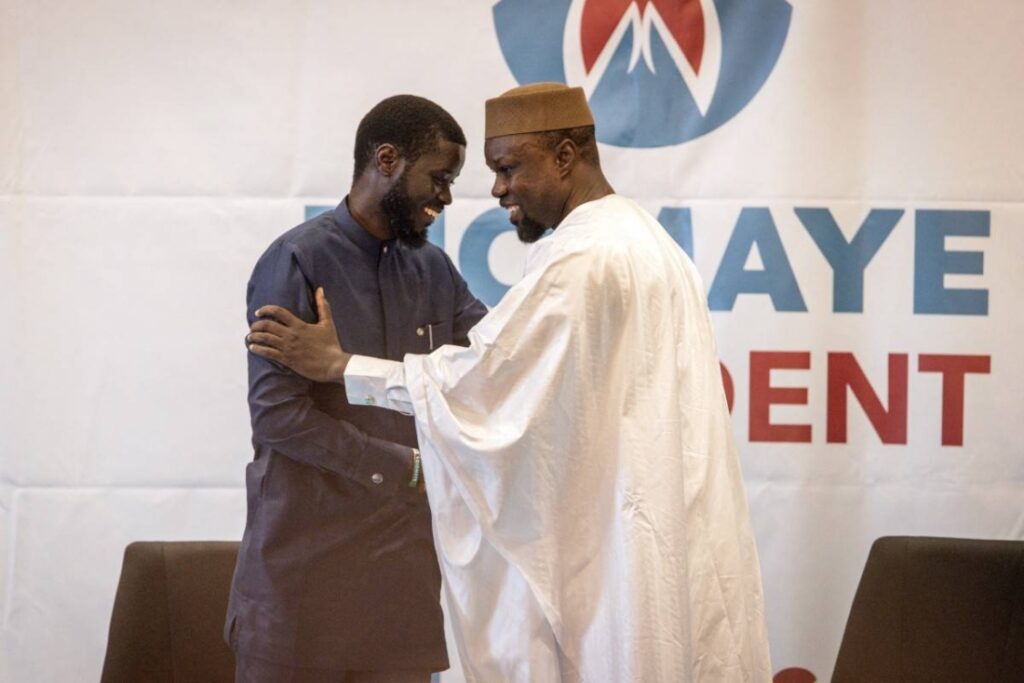
Faye’s 2024 election victory followed years of youth-led protests against his predecessor, Macky Sall.
For many young Senegalese, the promises Faye and Sonko – both in their 40s at the time – made have deepened the dis- appointment they feel today. “It’s a shame – we weren’t expecting this, especially coming from this regime,” said Pathe Baila Barry, a Cheikh Anta Diop student.
Anger over bursaries is only one symptom of broader economic strain. A 1% tax was rolled out last year on cash transactions in grocery stores and a 0.5% tax on bank transactions. Teachers’ unions have held nationwide strikes over staff shortages, salary inequity, and taxes.
The number of workers in the formal sector decreased by 5.2% between October 2024 and October 2025, according to a January economy ministry report. The construction industry has slumped since the government paused a number of projects in order to audit them shortly after taking office. The status of most of the reviews is unknown.
Debt situation deteriorating
Meanwhile, the government is in the process of negotiating a new deal with the International Monetary Fund, which froze a $1.8 billion support package in 2024 after the government uncovered an estimated $11 billion in hidden debt from former President Macky Sall’s administration. Senegal is now the most indebted country in Africa, with a debt-to-GDP ratio of 119%. The fiscal crisis has driven down the price of the country’s sovereign bonds, and its near-term commercial loans are reportedly trading at steep discounts.
Investors view a restructuring of Senegal’s debt as a likely scenario, but Sonko has said he would not accept such an outcome, as it would undermine the country’s sovereignty. It is not clear whether Faye agrees with this approach, but the discord between the two likely puts a deal with the IMF further out of reach. And protracted negotiations risk exacerbating the country’s governance challenges and worsening its economic situation.
A revised budget document released in October showed that Senegal’s debt-service payments will rise by $5.8 billion over the next three years, likely to slow private- sector growth and result in higher un- employment. Meanwhile, the government is responding with austerity measures, including raising taxes and slashing subsidies, which will further erode living standards for Senegalese over the next five years.
Beyond the IMF talks and the debt situation, the dust-up between Faye and Sonko risks further stalling their efforts to make good on campaign promises.
The two men came to power on a platform of change and a break from the ineffective, exceedingly bureaucratic governments of the past. Their to-do list included renegotiating agreements with foreign companies – particularly in the oil and gas sector – to make them more beneficial to Senegal; recalibrating the country’s relationship with former colonial power France; reducing the cost of living; and tackling corruption.
So far, the anti-corruption efforts have been front and center, with a number of former senior officials arrested on charges related to embezzlement and misuse of public funds. And France vacated its last military base in the country last year.
However, progress on other elements of the Faye-Sonko agenda has been slow, stoking sporadic anti-government protests. The cost of living remains high, and the government’s attempts to redraw contracts with foreign companies have not yielded many results. There has been only one major renegotiation, involving Saudi Arabia’s ACWA Power in mid-2025, but even this was seen as low-hanging fruit, as the original deal had only just been signed at the end of Sall’s presidency.
Rather than take responsibility for the situation and work together, Sonko and Faye seem ready to continue trading recriminations. Sonko, a populist firebrand, is likely to use Faye as the scapegoat for any continued failings of the government, blaming him for unfulfilled promises and a deteriorating debt situation. For his part, Faye – who appears to be quickly losing control over the legislature – will maintain that Sonko’s intransigence makes it nearly impossible for him to address the country’s problems.
Amid the power struggle at the top, the country’s regional position may start to shift. Senegal had previously been regarded as the tranquil oasis of West Africa. As one of the very few countries in sub-Saharan Africa to have never experienced a military coup, it was viewed as a stable haven for foreign investment.
However, the debt crisis, combined with political chaos, could see Senegal increasingly regarded as a high-risk environment. In October, the country’s debt was hit with its third downgrade this year, prompting a massive selloff in its euro-denominated bonds.
According to analysts in the region, some investors in Senegal are considering withdrawing and moving into military-run Guinea, which they perceive as a more promising place to do business, especially following the launch of the Simandou mine there in December.
Fading hopes
Faye and Sonko will need to find a way to rectify the situation before the next presidential election in 2029, as four more years of this would be disastrous for Senegal. An outflow of investment capital would be devastating for a country built on the promise of democracy and stability, and whose nascent oil and gas sector has the potential to turbocharge development over the next 10 years.
But the twin political and debt crises are likely to impede progress in that sector too, as policymaking will likely remain erratic in the coming years. As if to underscore the government’s lack of strategic direction and cohesion, Dakar announced plans to nationalize the Yakaar Teranga gas field earlier this month, only to quickly walk back that statement, maintaining that Kosmos Energy, the U.S.-based deepwater-oil company currently developing the site, remained a strategic partner.
Overall, Senegal’s government of change looks increasingly like a government of chaos. The more the country’s top two political leaders bicker over control, the more Senegalese will see their hopes for a prosperous future fade.