
After three years of civil war, Sudan is facing the most severe humanitarian crisis in the world, with millions at risk of starvation or famine. The capital, Khartoum, has been razed and is largely uninhabitable, and control of the country is split between the army, which governs Khartoum and the eastern regions, and the paramilitary Rapid Support Forces in the west. Although diplomatic efforts to resolve the war made progress in 2025, these initiatives now seem to be stalled. Regional powers, including Egypt, Saudi Arabia, and the United Arab Emirates, are supporting opposing factions, heightening the risk of broader regional involvement. While the Sudan conflict has been overshadowed by other wars in the Middle East, the United States continues to lead efforts to broker peace there, in the “Quad” group with Egypt, Saudi Arabia, and the UAE. But for these efforts to succeed, those three countries, who have influence over the conflicting parties, are best positioned to advocate for peace. They must intensify their efforts to resolve the situation before it deteriorates further. A special report by the International Crisis Group.
With the world’s attention fixed on the U.S.-Israeli war with Iran, the Sudanese civil war, not that far away, is grinding on with no resolution in sight. For nearly three years, two branches of the military, the Sudanese army and the paramilitary Rapid Support Forces (RSF), have fought bitterly for supremacy. Neither seems on the verge of achieving it. Control of the country is divided between them, and the risk of long-term partition is growing, with both sides naming governments that claimed nationwide sovereignty in 2025. The war has compelled as many as four million Sudanese to flee the country, displaced many more internally, and plunged several areas into prolonged hunger or famine. Foreign powers are also complicit, backing opposing sides. A U.S. effort to marshal outside actors to press the two sides toward peace was struggling even before the Middle East war distracted them all. But they must not neglect the Sudan file: They need to find a way to manage their own differences so they can map an endgame for the war before it expands further past Sudan’s borders.
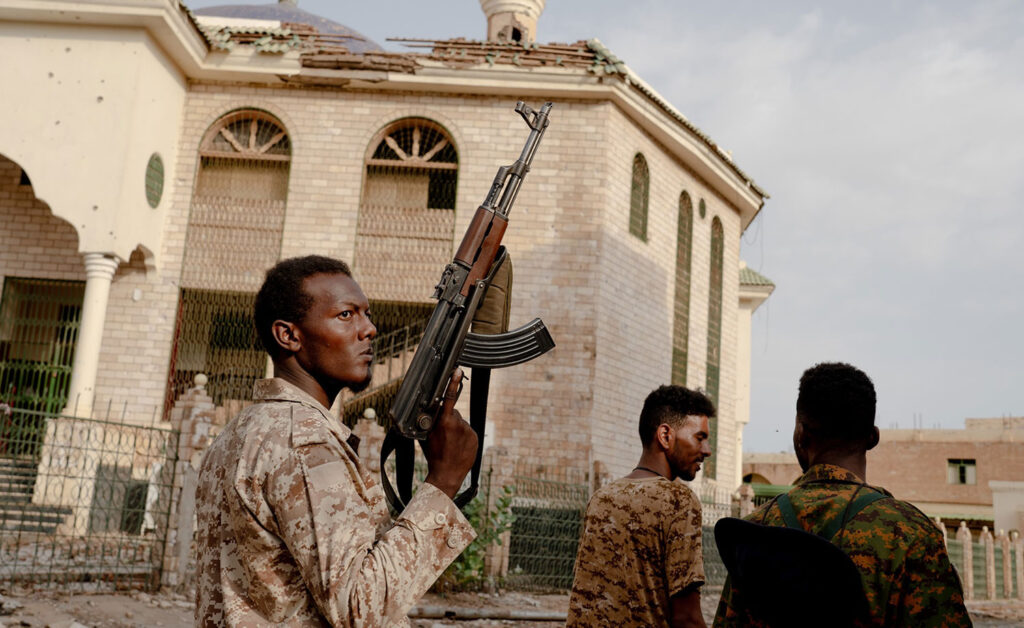
The war broke out in April 2023, following a military takeover that removed a civilian cabinet working toward a democratic transition. The army and the RSF had seized power together, but they soon came to blows. Each side’s fortunes have waxed and waned. The army and its affiliated government now hold the capital, Khartoum; the central Nile River corridor; and the east, including strategic Port Sudan. The RSF dominates most of the western Darfur region, with supply routes from Chad and Libya. The main front lines now lie in the west-central Kordofan region.
Peace efforts have been hampered by the fact that many of the foreign countries with influence over the belligerents have chosen to support either the army or the RSF. Due in part to this outside patronage, both sides have rebuffed would-be mediators, believing instead that they can win by force of arms and attrition. Worse, the outside backers appear locked in an escalation cycle inside Sudan, hoping to outlast and overpower the other side. Sudan’s neighbors in Africa and across the Red Sea are also divided and increasingly entangled in the war, with spillover effects apparent in Chad, Ethiopia, South Sudan, and Yemen.
Amid these pernicious dynamics, the main mediation effort has been led by a group known as the Quad, which is headed by the United States and includes the three Arab powers with the most sway over the conflict parties – Egypt and Saudi Arabia, which back the army, and the United Arab Emirates, the RSF’s primary patron. In September 2025, these four countries agreed on a peace roadmap that envisaged starting with a humanitarian truce before moving to a permanent ceasefire and talks about Sudan’s political future. Yet hostilities have continued to intensify on the ground. The army in particular has resisted the U.S. proposal, fearing that a truce would leave swathes of the country in the RSF’s hands. Meanwhile, relations among the Quad powers have deteriorated over the past year, with rancor between Abu Dhabi and Riyadh bursting into the open in December after Saudi Arabia used its military to stop a campaign by UAE-backed forces in Yemen.
The U.S.-Israeli war with Iran is dominating the headlines, but it has not, at least yet, altered the big picture in Sudan. When the smoke clears, all indications are that the UAE and Saudi Arabia will be locked in a rivalry over competing regional visions that have increasingly reverberated in the Red Sea basin and the Horn of Africa. They are unlikely to reduce their support for the opposing sides in the Sudanese war. Meanwhile, despite its preoccupation with the war in Iran – and the larger Middle East conflict that is shifting regional dynamics in ways that are not yet fully clear – Washington is still leading efforts to reach a ceasefire. It will likely continue to do so, unless the U.S. pivots away from its Sudan diplomacy or Middle Eastern, African, or European powers displace it, which does not look imminent.
Yet years of lackluster Washington-led diplomacy have produced disappointing results. Part of the problem has been a failure to bridge key disagreements between the UAE and Saudi Arabia (as well as Egypt). The September 2025 roadmap, for example, was a breakthrough as a basic framework for ending the war. Yet it also danced around core differences – including over the army’s political role, the RSF’s future, and the knotty question of how to handle the resurgent influence of Sudan’s homegrown Islamist forces in post-conflict Sudan. The lack of a common vision for the war’s end and its aftermath has undermined U.S. efforts to secure a humanitarian truce – which was meant to be the first step in bringing the roadmap to fruition. Even in the event of a temporary truce, those disagreements would likely stymie efforts to achieve a more durable peace.
What is clear is that if the U.S., its Arab partners, or anyone else is to have the best shot at achieving success, they will have to tackle these thorny issues sooner rather than later. The U.S. should use its political capital to try forging clearer agreement about Sudan’s “day after” among key outside players, especially Saudi Arabia, Egypt, and the UAE, and then work with them to push the conflict parties toward that off-ramp. Simultaneously, other diplomatic tracks should try to complement these efforts – leaders in the Horn of Africa could, for example, try to suss out how to coax the belligerents toward silencing the guns on either a short- or long-term basis, while other states and multilateral bodies work in other formats to advance conversations about Sudan’s post-conflict political order. A high-level effort to bring about a clearer modus vivendi between Riyadh and Abu Dhabi when it comes to their competition in the Red Sea basin and the Horn of Africa would also be welcome; facilitators might include major regional actors, European security partners, or, of course, the U.S.
After three years of brutal war, it is sobering that the options for peacemaking in Sudan remain so limited – and so dependent on the diplomatic efforts of actors who have yet to deliver. If nothing else, perhaps the prospect of further instability in a region deeply unsettled by the new Middle East war will generate a new level of seriousness from the outside players most enmeshed in Sudan’s war to wind it down rather than escalate it. If not, the prospect of yet more tragic anniversaries looms over this war-ravaged country.
The war’s outlines
Sudan’s civil war broke out three years ago, amid a power struggle among the military units that seized power after the fall of the Islamist-led authoritarian regime of Omar al-Bashir. In 2019, youth-driven protests helped topple Bashir, ushering in a civilian government – which entered an awkward power-sharing arrangement with both the army and the RSF – that was supposed to shepherd the country toward democratic elections. But two years later, the military branches dissolved the government and took power for themselves. Tensions soon built between army chief General Abdel Fattah al-Burhan and his junta deputy, RSF leader General Mohammed Hamdan Dagalo, “Hemedti,” who disagreed over whether the army should absorb the paramilitary into its ranks. In April 2023, their forces started fighting in Khartoum, with hostilities spreading quickly to central and western parts of the country.
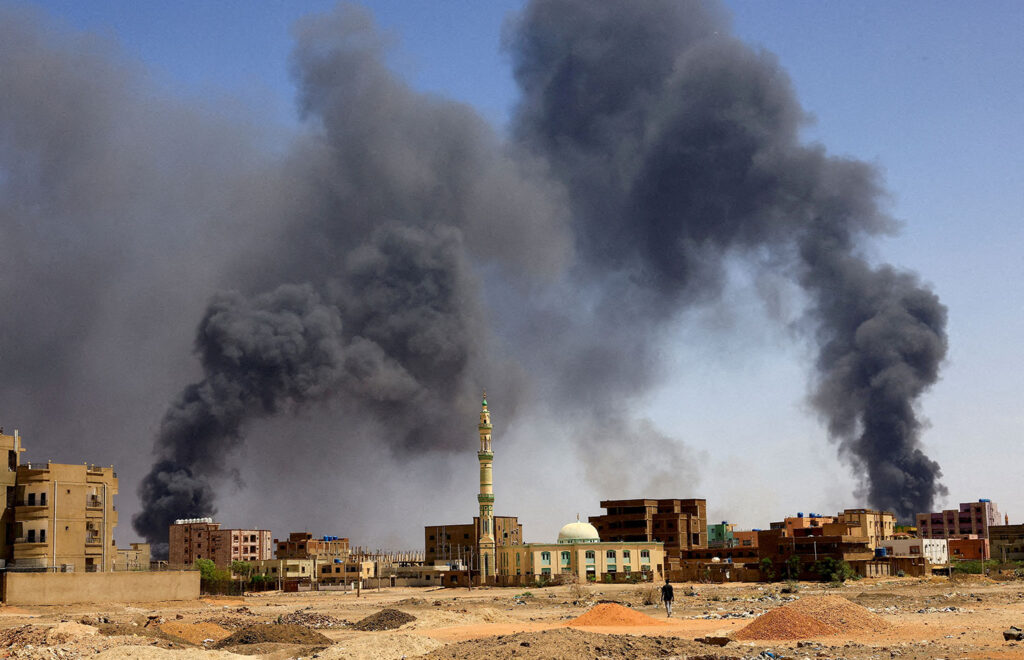
The RSF held the momentum during the war’s first year. Its fighters rapidly seized most of Khartoum and the surrounding cities, causing their residents, including the country’s professional class, to flee en masse. It launched offensives southeast of the city, sacking swathes of Sudan’s riverine heartland. In this period, the RSF also tightened its grip on much of its historical base in Darfur, which gave it a commercial lifeline to neighbors Chad, Libya, and the Central African Republic, as well as firmer control of major gold deposits.
African, Arab, and Western diplomats, as well as independent investigations, point to a second reason for the RSF’s gains: the financial, military, and logistical support it has received from its main patron, the UAE. The UAE has reportedly kept up a steady supply of arms and other materiel, at first primarily through eastern Chad, before spreading out the shipments across a broader set of routes.
The Sudanese army, meanwhile, decamped to Port Sudan, the country’s primary maritime gateway, setting it up as the de facto administrative capital. But it struggled to regroup on the battlefield, despite its air superiority.
To help its soldiers turn the tide, the army assembled a coalition of militias, employing a strategy the Sudanese army has used for decades. To this end, Burhan forged an alliance with former rebel groups from Darfur, known collectively as the Joint Forces, several of which had signed a peace agreement with the post-Bashir transitional government in 2020. Most of these groups had opposed both the regular army and the Darfuri Arab militias that have long formed the RSF’s core. They tried to stay neutral when the war began, but by late 2023, however, the most prominent group, led by Darfur Governor Minni Minawi, had decided to align with the army and to mobilize Darfuri men to resist the RSF.
Further, the army raised popular and communal defense militias in central and northern Sudan. It leaned heavily on its longstanding alliances with Islamist politicians and others affiliated with the old Bashir regime. Some of these groups are linked with the former ruling National Congress Party or the associated Sudanese Islamic Movement, a network run by senior figures tied to the former regime. The army also armed tribal militias to augment its sometimes-meager infantry divisions. What united these groups was animosity toward the RSF, which had sharpened after its rampant abuses in areas its fighters captured, including widespread looting, killing, and sexual violence, mostly against women and girls.
Burhan also corralled support from an array of outside powers, each with its own interests in Sudan, including Egypt, Eritrea, Turkey, Qatar, Iran, and, increasingly, Saudi Arabia, which at first had preferred to play the role of neutral mediator. Today, all these countries recognize Burhan as Sudan’s head of state, as do the UN, the Arab League, and the Inter-Governmental Authority on Development (IGAD), the Horn of Africa’s regional bloc. Most of Burhan’s backers frame their support for the army and its government as helping Sudan put down an internal rebellion. Some chose sides partly as a way of providing a counterweight to the UAE’s sponsorship of the RSF.
Sudan’s war has also unfolded amid a scramble for influence in the Horn of Africa. The country boasts a long Red Sea shoreline and sits at a crossroads linking the Horn with North Africa and the Mediterranean basin. External powers that seek to guide its postwar direction might view pouring in weaponry and financing for the belligerents as advancing that goal. Turbulence in the Middle East has only made outsiders keener on attaining greater sway in the region. Israel’s December 2025 recognition of Somaliland – which Saudi Arabia and Egypt strongly opposed – was an augury of the shadow game among rival countries trying to establish a firmer foothold. In these circumstances, Sudan’s civil war has gradually become a stage for indirect competition among foreign powers with overlapping or clashing agendas, all trying to shape the conflict’s trajectory.
Despite occasional tactical gains, none of the parties has managed to secure a decisive advantage. In the second half of 2024, the army and its disparate coalition made their first significant gains on the battlefield, aided by new drone capabilities. By March 2025, they had pushed the RSF out of Khartoum and its bases east of the Nile. The recapture of the capital proved a turning point in the war. It bolstered the army’s claim to be Sudan’s legitimate government, even if the country’s western regions remained out of reach. The army’s offensive forced much of the RSF to retreat to Darfur. The front shifted west to El Fasher, the army’s last bastion in North Darfur, which the RSF had been besieging for over a year, and to Kordofan. But the army’s advance soon stalled once more.
The pendulum then swung back toward the RSF, buoyed by the UAE’s support. In May 2025, it began launching long-range drone attacks on targets in eastern Sudan, from Port Sudan and Kassala to critical oil depots and Khartoum’s airport. These surprise attacks not only escalated the war but also enraged nearby countries, especially Saudi Arabia, which sits across the Red Sea from Port Sudan, and Egypt, which shares a 750-mile (1,200km) border with Sudan. The RSF also went on the offensive to consolidate its control of Darfur, capturing the tri-border region linking Sudan with Egypt and Libya. With this maneuver, it acquired a more direct supply route from southern Libya, helping it ease its reliance on eastern Chad as the main conduit for weapons deliveries.
In October 2025, the RSF captured El Fasher after a roughly 18-month siege. It had surrounded the city in mid-2024, blocking aid deliveries and constructing an earthen berm to hinder movement. It also stepped up drone and artillery strikes, including on mosques, hospitals, and displacement camps, killing or maiming hundreds of civilians. When it finally decided to overrun the city, its fighters slaughtered thousands of residents, looted businesses, and destroyed buildings, at times filming their actions triumphantly with their mobile phones. Particularly egregious was the reported killing of 460 patients and others at the al-Saudi Maternity Hospital. Torture, abductions, and sexual violence were also documented by Sudanese and international human-rights organizations, as well as by a UN fact-finding commission, which called them “indicators of a genocidal path.” These atrocities brought a surge of negative coverage of the UAE’s support for the RSF, including in the Arab media.
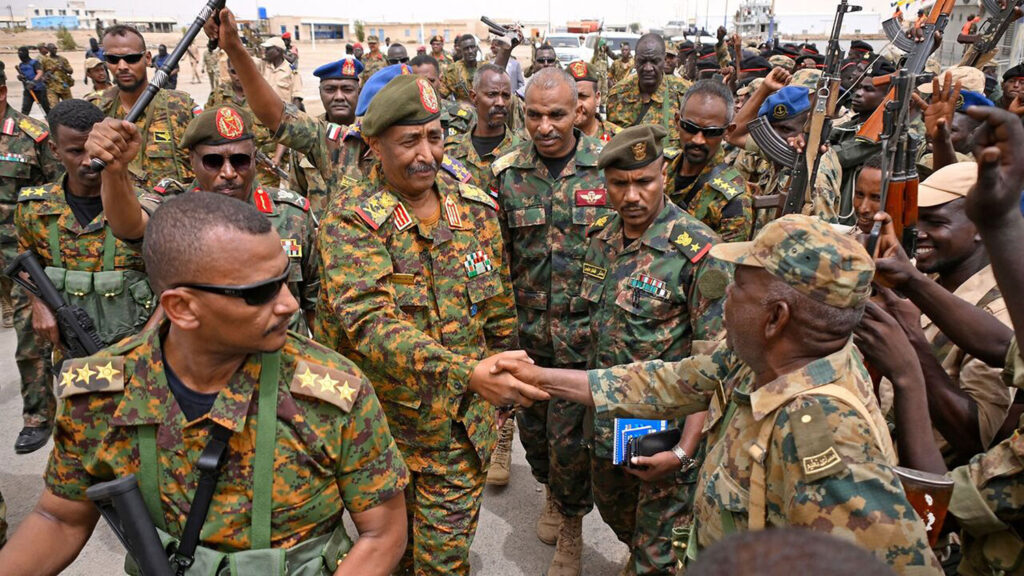
Following El Fasher’s fall, the army now controls most of central, eastern, and northern Sudan, while the RSF and its allies dominate the west and parts of the south. The main battlefront has shifted to Kordofan, roughly in the middle-west of the country, wedged between the warring parties’ strongholds. The army is aiming to push the RSF out of Kordofan and to try to recapture Darfur. The RSF wants to move eastward through Kordofan so that it can once again threaten Khartoum and the Nile valley. It also hopes to put pressure on these areas from the southeast through recent gains in Blue Nile state, which borders South Sudan and Ethiopia.
Escalating proxy dynamics
If the war settles into a stalemate along a front in Kordofan, Sudan’s division might become entrenched, with the country split roughly in two. Yet the continued fighting and the heightened regional competition for influence in Sudan suggest that the conflict is unlikely to peter out along a stable partition line any time soon.
Political developments are also dividing the country. In May 2025, Burhan appointed former diplomat Kamil al-Taib Idris as prime minister of the army- affiliated government in Port Sudan. Idris, the first civilian to hold the post since the 2022 coup, unveiled a 22-member cabinet composed of technocrats, allied militia leaders, and army-aligned civilians, including Islamist figures, reflecting the army’s effort to accommodate the range of groups supporting its war effort. The cabinet includes two women. Though Idris has pledged to maintain independence from the military, in practice his authority is limited by the army’s oversight and by a constitutional framework that concentrates power in the high command. At present, the government is attempting to return to Khartoum, where it is reopening ministries.
Three months after Idris announced his cabinet, the RSF and its allies swore in a generally unrecognized government of their own in Nyala, capital of South Darfur, naming Hemedti as chair of a Presidential Council and Mohammed Hassan al-Ta’ishi, a politician who hails from a small Darfuri Arab community, as prime minister at the helm of a cabinet. This move followed the RSF’s formation of a broader political coalition, known as Tasees, in Nairobi in February 2025. Tasees includes other rebel groups and figures, most prominently the Sudan People’s Liberation Movement-North under Abdelaziz Al-Hilu. Despite the fanfare around its creation, the RSF’s ostensible government is largely inoperable, as most of its officials reside outside Sudan. No government or international organization has officially recognized it, and many (including the African Union) have rejected it outright.
Yet little suggests that either side is content to focus on ruling the area under its dominion. Instead, the Sudanese army, backed by its foreign allies, has continued to launch offensives in Kordofan, helped by new drone capacity. Meanwhile, the RSF is trying to widen a new front in the southeast, in Blue Nile state. In February, Hemedti asserted that it had a duty to its “martyrs” to return to Khartoum.
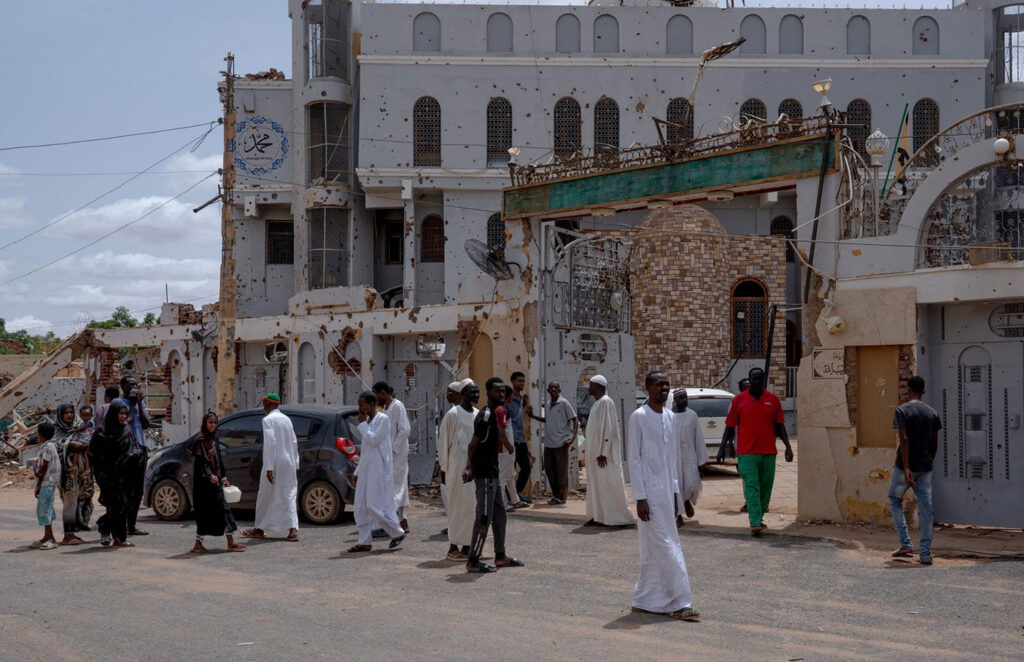
Meanwhile, the conflict continues to be devastating for Sudan’s civilian population. There are no reliable casualty figures, but some 14 million people have been displaced, including about four million refugees who often live in difficult conditions in neighboring countries like Chad, South Sudan, and Egypt. Humanitarian conditions are the worst in the world, with several pockets of famine. Overall, more than 20 million Sudanese, nearly half the population, are classified as acutely food-insecure.
The conflict has affected men and women in different ways. Women and girls have faced widespread rape, sexual exploitation, and forced labor. The destruction of health-care facilities and restrictions on movement due to insecurity have severely undermined access to maternal and reproductive health services, placing pregnant women and new mothers at heightened risk. Men, on the other hand, are often targeted for killing, torture, disappearance, arbitrary detention, and forced recruitment by armed groups and militias, particularly in areas of active fighting or contested control.
Resistance to peace talks
Since the war began, the warring parties have had vastly different positions about how it should end and what should happen to Sudan afterward. This gap has hobbled peace negotiations, as has the army’s resistance to speaking directly with RSF leaders.
There is still stiff resistance to serious peace talks within each camp. Burhan faces opposition to the idea from various sides. First, many Sudanese (including those from Khartoum and other areas where the army enjoys significant support) despise the RSF, which they view as a heinous UAE proxy that they blame for their country’s destruction. To them, the idea of talking with the paramilitary is anathema. Second, the army continues to rely on its alliance with anti-RSF Darfuri militias, which have helped it retake Khartoum and fight in Kordofan, and are still harrying the RSF in Darfur. Those groups, heavily composed of non-Arab fighters, fear a truce that would leave Darfur in the RSF’s grip and their communities vulnerable to reprisals.
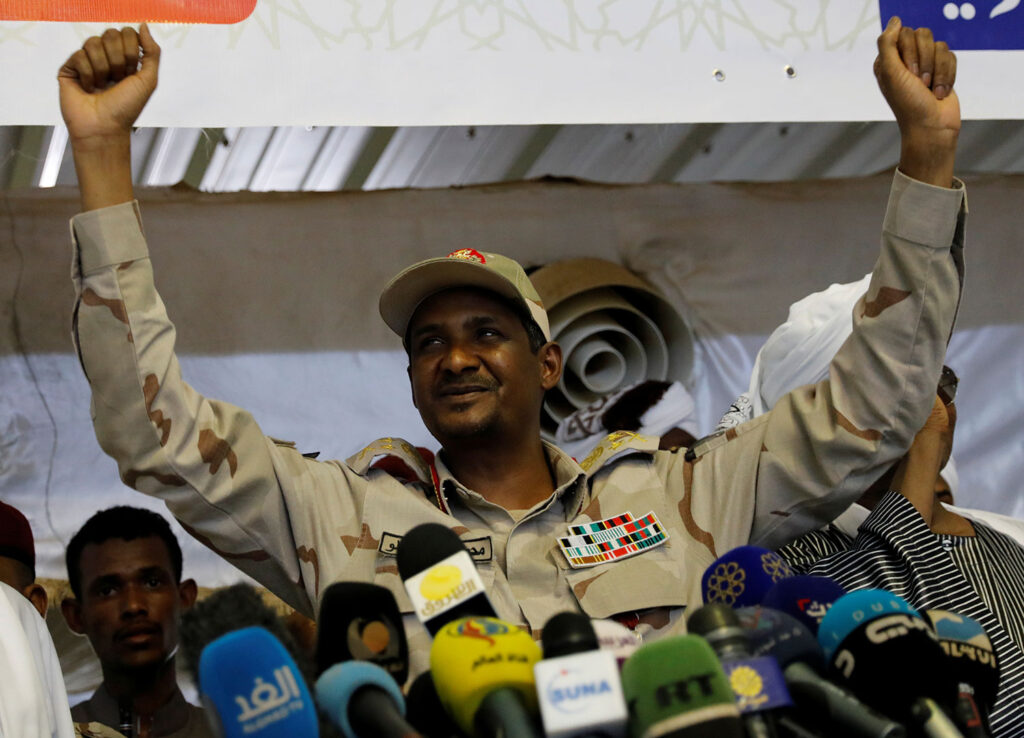
Lastly, the anti-RSF Islamist militias and powerful Islamist figures from the Bashir regime are also leery of peace talks, especially those led by the Quad. They worry that any new army-RSF pact or civilian government brokered by the U.S., which has designated the Sudanese Muslim Brotherhood as a foreign terrorist organization, would again exclude them from political authority and crackdown on their networks. While there is no major Sudanese organization that identifies itself as a Muslim Brotherhood chapter, the U.S. has described the Sudanese Islamic Movement as one. It regards the Islamic Movement, led by Ali Karti, a former foreign minister under Bashir, as the Brotherhood’s political wing in Sudan, and the al-Baraa militia, which fights alongside the Sudanese army and has a major social media presence, as its armed wing. These groups are a pillar of Burhan’s wartime coalition.
Burhan’s government has promoted a proposal for ending the war on its own terms. This plan, which it presented to the UN Security Council, calls for the RSF’s full unilateral withdrawal to cantonment camps for disarmament, followed by a national dialogue. This is not a promising basis for negotiations. On the RSF side, there is little apparent appetite for major concessions, whether unilateral withdrawal, disarmament, or absorption into the army. The RSF’s political coalition instead demands an end to the army’s political role, a new civilian government, the creation of a new national army (in which it would participate), and a new federal system that provides significant regional autonomy from the national government. It also wants Islamists out of politics.
Though the RSF has been more open to peace talks than the army, it has rejected formats that recognize Burhan as Sudan’s leader and his administration as Sudan’s government – a precondition Burhan has insisted upon in previous mediation attempts. Hemedti has long harbored ambitions to rule Sudan and is likely to keep resisting any effort to dismantle the forces and commercial empire that undergird his political power.
Would either side change its positions if it came under significant pressure from their main patrons? The RSF is especially susceptible, given its heavy reliance on one sponsor, the UAE. If Abu Dhabi throttles back its support, or if it begins struggling to get weapons and equipment into western Sudan, the RSF’s calculations could shift. While Burhan and his coalition also receive external support and are thus vulnerable to pressure from outside actors, they are less dependent on a single supplier and face fewer logistical obstacles in importing arms, given their bases on the Red Sea.
The divided Quad
Given the chasm between the two sides and the deep involvement of outsiders, diplomacy has resorted to an “outside-in” approach that tries to align the key external players behind ways to end the war and then asks them to persuade the parties to follow suit. Right now, the primary vehicle for these efforts is the Quad. It was established informally in 2024, under then-President Joe Biden’s special envoy, Tom Perriello, but it has taken on greater importance under President Donald Trump. By mid-2025, the Trump administration had made the Quad talks the core of its Sudan diplomacy, driven chiefly by Massad Boulos, Trump’s son-in-law’s father and a Lebanese-American truck salesman who is now a senior adviser for African and Arab issues at the State Department. On Sept. 12, 2025, after months of U.S.-led dialogue, the Quad proposed a three-month humanitarian truce, followed by a permanent ceasefire and a nine-month transition to a civilian-led government, alongside an immediate halt to outside military support.
The Quad’s roadmap has yet to get off the ground, however, and if it is not revived, it could become a dead letter.
Too big and cruel to let rage
Three years into the devastating war, prospects for a negotiated settlement remain dim. The army refuses to talk to the RSF, while both parties still appear to believe that their outside backing puts them in a position to win a war of attrition. The sharp discord between Saudi Arabia and the UAE has undercut the momentum that started building in 2025 within the Quad format. Horn of Africa dynamics are also trending in the wrong direction, with rivals Ethiopia and Eritrea migrating toward opposite sides of the Sudan war, in a way that suggests a new war between the powerful Horn neighbors could spill over into Sudan. The U.S.-Israeli war with Iran seems likely to retard and possibly suspend high-level regional diplomacy on Sudan as long as it continues.
But neither fatalism nor distraction is an excuse for allowing Sudan’s war to disappear from the international agenda, particularly since it shows no sign of burning out on its own. The war is too big, cruel, and geopolitically important to be allowed to rage indefinitely without a serious international effort to bring it to a close. Even if diplomacy is temporarily hindered, the time is right to take stock of where diplomatic efforts stand and where they might go next.
How can diplomacy work?
First comes the question of which diplomatic format makes sense. As noted, for all the difficult dynamics described above, the Quad remains the leading forum for reaching a ceasefire in Sudan, as well as the group of actors best positioned to bring the war to an enduring end.
If the U.S. wants to be effective diplomatically, it will need to intensify its efforts and put more political capital on the line. It remains unlikely that the two Sudanese parties will bridge the gaps between them without urging from their outside backers, and it is likewise improbable that the outside backers will apply that pressure without narrowing their own differences first, which may well require more senior-level diplomacy from Washington. Massad Boulos, by many accounts, deserves credit for leading the negotiations that led to the September 2025 roadmap – the first in- direct talks between the two parties in nearly two years – and his dogged pursuit of a humanitarian truce. His continued engagement would likely be constructive. Yet, given the divergences that remain, the personal involvement of Trump or another top-level experienced official from his foreign-policy inner circle, perhaps Secretary of State Marco Rubio, could prove essential for breaking the logjam in the Quad, particularly between Riyadh and Cairo, on one side, and Abu Dhabi.
Washington may need to do more legwork to supplement its effort to secure a humanitarian truce, which could remain stuck without any headway on longer-term political and security arrangements. Even if the U.S. does manage – against all odds – to force through a truce in the short term, the belligerents would clearly struggle to come to a durable ceasefire, much less a lasting peace, without a stronger steer from key regional players. Thus, it may make sense to redouble efforts at the highest levels to work out a landing zone that all Quad members can genuinely live with and all agree is better than the bloody status quo.
Finding a workable middle ground among those outside players has long proven a challenge. It would require Abu Dhabi and Riyadh and Cairo to acknowledge that none of them will fully get their way in Sudan. The three could, however, agree to work together on the contours of a deal that would give each of them essential assurances.
For Saudi Arabia and Egypt, that could mean, at minimum, a contained and curtailed RSF that does not threaten Khartoum or eastern Sudan, nor retain the ability to split Sudan in two. This would probably require an Emirati commitment to hold the RSF to future deadlines for withdrawing, integrating, demobilizing, or expatriating its fighters.
The UAE, meanwhile, would seek clear guarantees that the Sudanese army and security apparatus will distance itself from the Bashir-linked Sudanese Islamic Movement, including through rebalancing in the officer corps and the demobilization of militias, while recognizing that some Islamists will invariably retain influence. Agreement to support forming a civilian unity government will also be essential, so that neither Egypt nor Saudi Arabia is faced with a failed state, and so Abu Dhabi has authorities to deal with besides the Sudanese army.
If the Quad’s Arab powers can come together on these broad principles, the next step would be for them to press the warring Sudanese parties to agree to this framework and push them into direct or indirect negotiations over the remaining details for a durable ceasefire. Ideally, such talks would be complemented by an immediate humanitarian truce, along the lines the U.S. has been proposing, and a suspension of arms flows, which the U.S. would commit to keeping tabs on.
Can Horn leaders help?
Given the tattered state of diplomacy, no route toward ending the war should be left unexplored. Horn of Africa leaders, despite their differences, should rekindle their own early efforts to bring Burhan and Hemedti together for high-level talks. They last made such an attempt in late 2023, under Intergovernmental Authority on Development auspices, but the meeting fell through at the last minute, with Burhan later pulling Sudan out of the bloc. Still, Sudan rejoined IGAD in 2026, raising the prospect of a new push. African heads of state, if they work together, have the convening power to bring both belligerents to the table. Djibouti, IGAD’s current chair, is close to Burhan, while Ethiopia, Kenya, and Uganda have warm relations with Hemedti. While the Quad’s Arab leaders work at their level to narrow their differences over Sudan’s postwar state, the African leaders could use this parallel track to sound out the parties on what it might take for them to agree to a truce in line with the Quad’s roadmap, which IGAD and the African Union (AU) have already endorsed.
Diplomats in both formats would also need to think about challenges after any breakthrough that stops the fighting. First would be enforcing and monitoring any humanitarian truce or more enduring ceasefire, especially given the numerous allied militias on both sides that would need to comply. Both parties would need to commit to taking responsibility for the actions of these armed groups. Monitoring teams would probably need to include representatives of both belligerents, as well as outside experts, such as from the UN or AU.
The next step would be to tackle the intra-Sudanese political process that would come next under the Quad roadmap. Washington looks like it is strengthening coordination with the European Union, which together with the UN, the AU, IGAD, and the Arab League, aims to facilitate civilian political dialogue through a separate grouping of multilateral institutions on Sudan known as the Quintet. Swiss diplomats have also hosted meetings between opposing political factions, while Egypt, Norway, the UK, and Qatar have all also sought to help get intra-Sudanese discussions going.
While the September 2025 Quad roadmap (which foresaw an immediate truce) called for a political process to start after the conclusion of ceasefire talks, the AU, the EU, and others have been pushing for a wider Sudanese political process to start posthaste, under the Quintet’s auspices, though AU-led and EU-supported attempts to start such dialogue in the middle of the war have thus far fallen flat. If those efforts, which deserve support given the breadth and magnitude of the issues that Sudanese need to discuss, gain traction, then coordination between the Quad and Quintet will be crucial. New UN envoy Pekka Haavisto, a former Finnish foreign minister, could emerge as a point person for rallying diplomacy, especially if U.S. efforts tail off.
There is also an urgent need to defuse Sudan-linked tensions in the Horn of Africa more generally. All those with influence, including in Africa, the Middle East, Europe, and North America, should press the region’s leaders to lower the political temperature and prevent the Sudan civil war from spilling over regional borders.
Any way out?
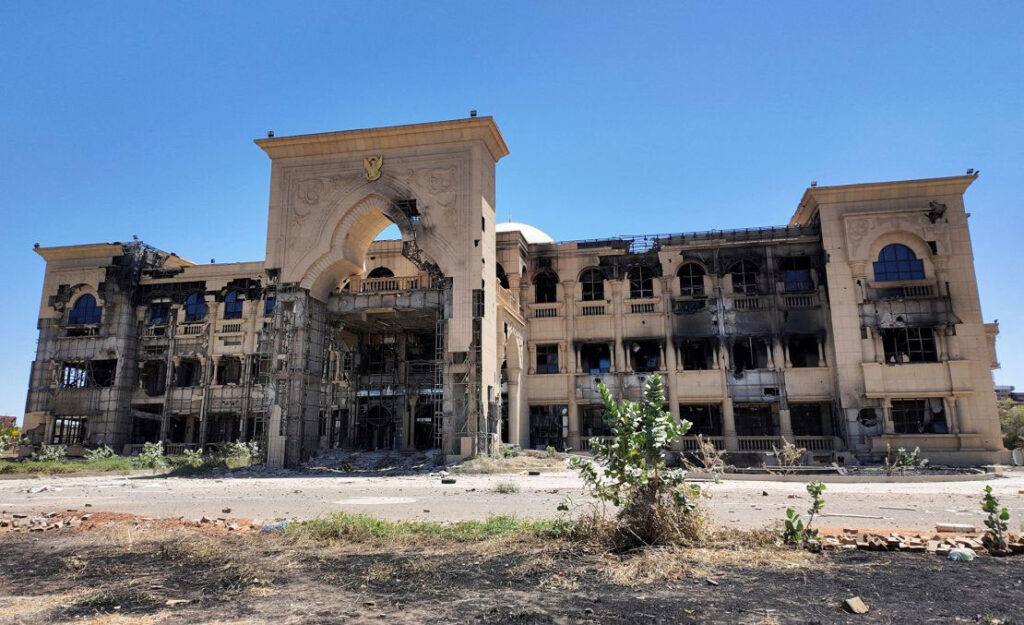
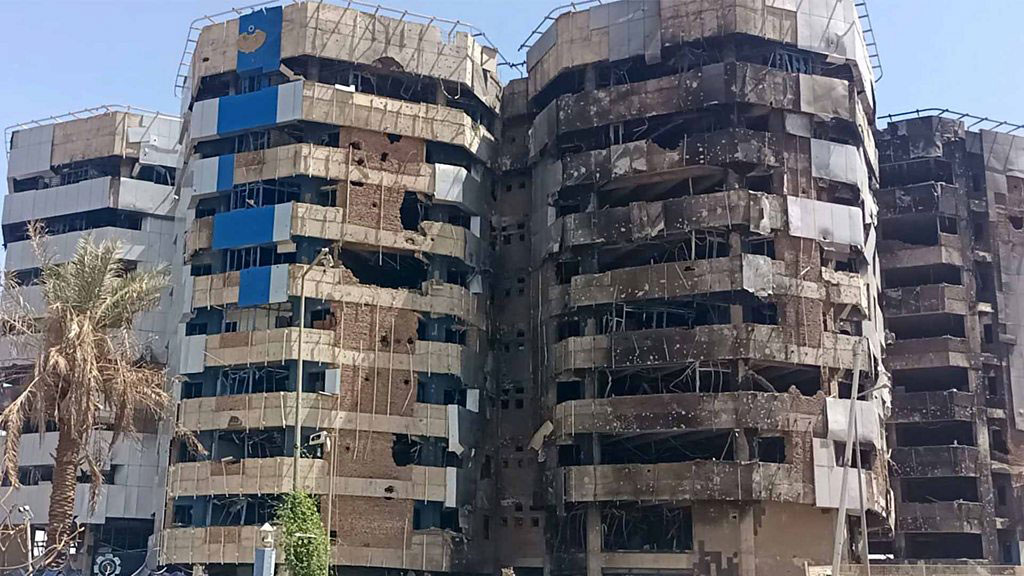
Sudan’s spiraling conflict is the worst of all nightmares for Sudanese and is now contributing to instability far outside its borders. Khartoum is the only world capital to be razed in recent years, and it remains virtually uninhabitable. The rest of the country faces the worst humanitarian conditions on the planet.
Alarmingly, the squabbles among outside powers involved in the conflict only seem to get more bitter.
Relying on the United States to bring this conflict to an end has been a recipe for disappointment over the past three long years. Other states from Europe to the Middle East to the Horn of Africa will also need to work whatever angles they can – seeking to forge a rapprochement among the Quad’s Arab states, encouraging discussion of Sudan’s political future, and (in the case of regional powers) striving to manage the risk of spillover.
Three years into Sudan’s horrendous conflict, there is no clear path out. But if those positioned to do so use the tools at their disposal, they may yet be able to blaze such a trail and, in the meantime, limit the risk that this war spreads its misery any further in the region.