
Africa sent 10 teams to this year’s World Cup and nine advanced to the knockout stage. The continent’s impressive run is inspiring international fans, especially people of African descent in the United States and elsewhere. Ken Makin reports.
Soccer was the furthest thing from Ed Owusu’s mind when he moved from Ghana to the U.S. as a 7-year-old in 1997. The beautiful game to him at the time was basketball, played by Michael Jordan and the NBA champion Chicago Bulls.
But the 2002 World Cup – and Brazil’s brilliance – changed the viewpoint of Owusu on international football. Once his native Ghana made its first World Cup four years later and faced off against Brazil, he was a fan and began to cherish the game’s patience and creativity.
“A lot of people don’t like watching soccer because they feel like it takes forever to score. But that’s the whole point. It’s all strategy,” Owusu says. “I think creating chances – teams creating chances to break down a defense is the allure for me.”
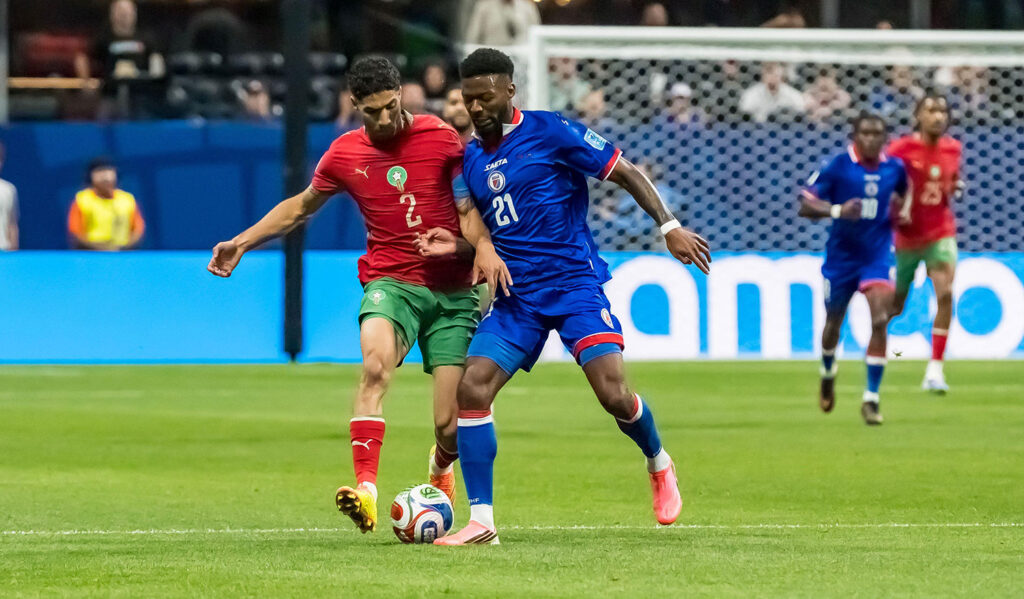
Creating chances could be the theme of the 2026 World Cup. FIFA’s decision to expand the field from 32 to 48 teams captures the shared love for o jogo bonito, or “the beautiful game,” coined by Brazilian football icon Pelé. The record number of African teams that qualified for the World Cup is also the same as the number on the back of Pelé’s jersey: 10.
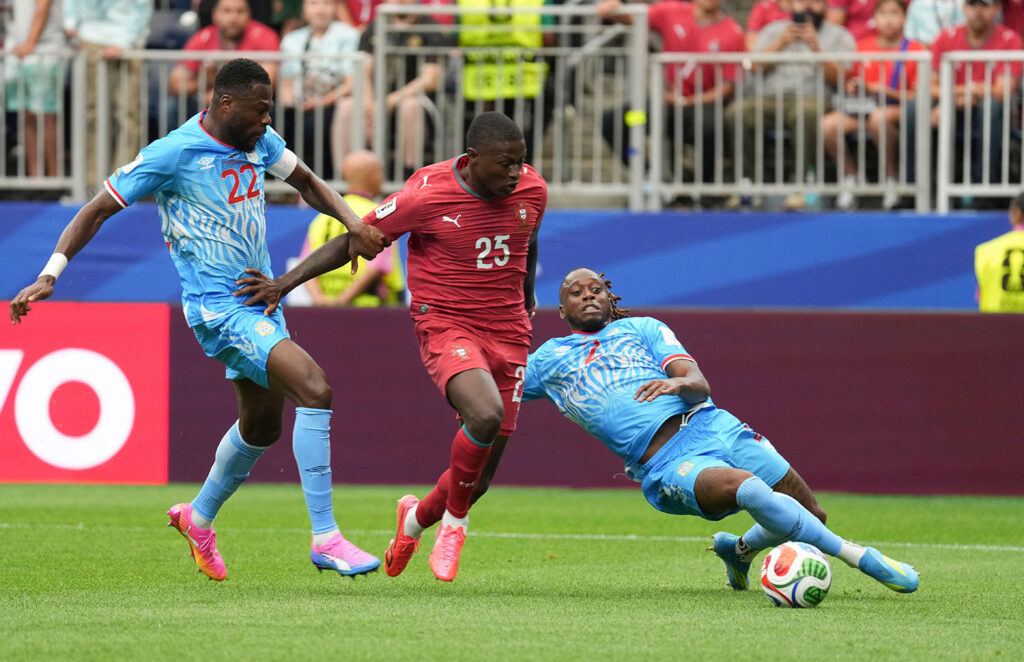
When nine of those 10 teams made the knockout round of 32 teams, it was rightly seen as a victory for the African continent and its diaspora, the worldwide community of people of African descent. It was only 12 years ago that two African countries – Algeria and Nigeria – made the knockout round, then comprising 16 teams, for the first time in history. No African teams made the knockout round in 2018; then, in 2022, Senegal and Morocco advanced, with Morocco making a tantalizing run to the World Cup semifinals.
Global success
For the diaspora, the victory goes beyond the success of football on the mother continent, and even beyond the excellence of European and American players with African ties and roots such as France’s Kylian Mbappé and England’s Bukayo Saka. Mbappé’s father was born in Cameroon, and his maternal grandparents are Algerian. Saka’s parents emigrated from Nigeria to London before he was born. This emerging football success also showcases the diaspora’s tenured appreciation of international football, even if that appreciation isn’t always presented in the mainstream.
Alexis McCoy was 11 when her parents took her to see a World Cup game in 1994, the previous time the United States hosted the international sporting event. She “vividly” remembers the match between defending champion Germany and South Korea at the Cotton Bowl in Dallas, a 3-2 thriller.
“I got sunburned real bad,” Ms. McCoy says with a laugh. “We were up high in the stadium and we had binoculars. We were sitting next to this German man and his son, and we gave the little boy the binoculars so he could see.
“I got a Germany jersey and wore it in my seventh-grade school picture.”
Over 30 years later, she and her father continued the family tradition in Kansas City, Missouri, taking in the recent World Cup match between Austria and Algeria. Back in 2018, her family looked into their ancestry, and decided to use that knowledge to select jerseys for this year’s event. McCoy, a married mother of two, wore a Côte d’Ivoire jersey. Her husband, Michael Sr., wore a Nigerian jersey, and her father wore Ghana’s colors.
“Even though we weren’t going to see those teams, we wanted to represent our ancestors and give a nod to those countries,” she says. “So many people approached us (about our jerseys), and it was exciting to connect in that way and see people there for the love of the game, love for their country, and their ancestry.”
She compares African-descended players’ success with national squads on and off the continent to Black athletes’ choice in the U.S. between competing for historically Black colleges and universities (HBCUs) or predominantly white institutions. How much stronger would the African teams be if more top African-descended players opted to play for them, she wonders.
McCoy adds that countries largely made up of African descendants, like Haiti, deserve more support. “This is their first time back in 52 years, and it’s crazy that it took them so long to get back to the World Cup.”
Coming together
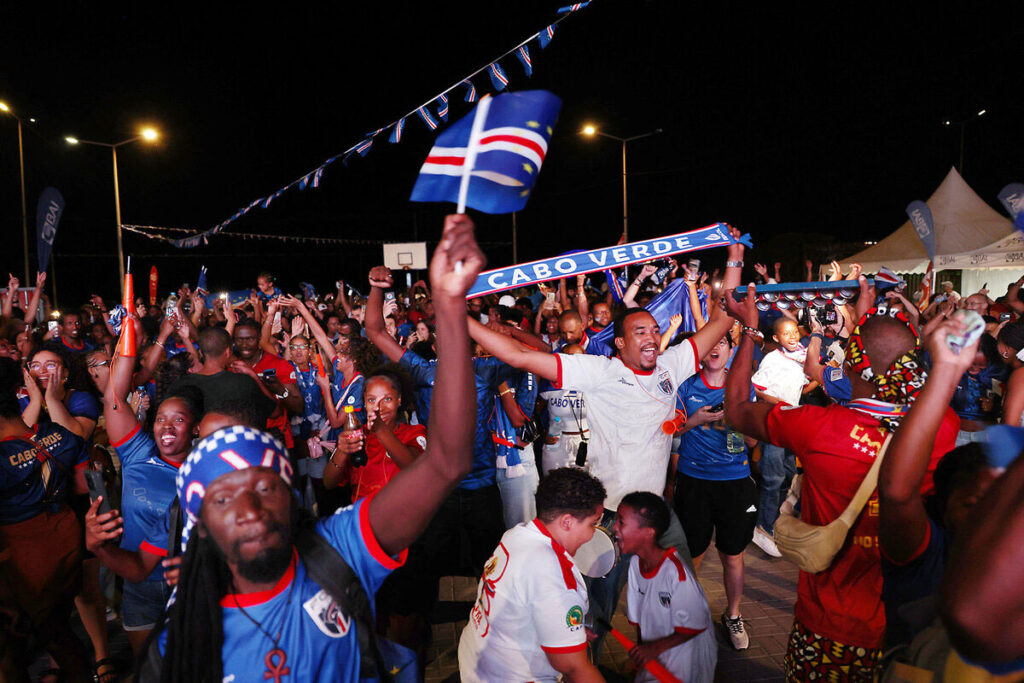
For two other small island nations, Curaçao (population of 156,000) and Cape Verde (population of 530,000), this is their first time in the World Cup. Cape Verde’s “underdog” story inspired Jamaica-born Natalee Bailey, a chemical engineer who caught a pair of games in Houston and was amazed at the unifying energy.
“I ordered a Cape Verde shirt and went to the game, and I wondered, ‘Where are all these Cape Verde fans coming from?’” she asked. It appeared that the vast majority of people in the stadium, most from other nations, “came in to support and cheer on this tiny African country that no one had ever heard about.”
“It was a moment where it felt like the world came together.”
Bailey, who travels widely and documents her trips under the moniker “Jamaican girl to the world,” got into soccer because of its popularity in her native country. After she finished graduate school in Houston, she found community playing with other expatriates in Saturday morning matchups.
Even with her worn passport and educated experiences, she acknowledged that the World Cup is one of a kind.
“One of the things my friends and I joke about is that governments may be fighting, but the cousins are not fighting,” she said. “In Houston, where we’re hosting some of the games, there’s so many foreigners, and everybody’s really nice to each other.
“During my travels, a lot of times, I get asked about the madness that’s happening in the U.S. right now,” she added, alluding to various visa controversies and the country’s restrictive border policies. “I think the World Cup, thankfully, has been a time where the image of the U.S. has somewhat improved.”